
Why Do Some Network Switches Have Empty SFP Ports? The Real Reason Behind Modular Network Design
2026-08-05 20:57:19
Why Do Some Network Switches Have Empty SFP Ports?
If you've ever looked at an enterprise network switch, you've probably noticed something interesting.
The RJ45 Ethernet ports are often fully occupied with cables connecting servers, computers, IP phones, or wireless access points.
However, the SFP ports frequently remain empty.
At first glance, it may seem like wasted hardware.
But in reality, those empty SFP ports are one of the biggest advantages of modern network design.
They're intentionally left available to provide flexibility, simplify future upgrades, and support different networking environments without replacing the entire switch.
Let's explore why network switches include these seemingly unused ports—and why they are far more valuable than they appear.
What Is an SFP Port?
An SFP (Small Form-factor Pluggable) port is a modular interface that accepts interchangeable transceiver modules instead of having a fixed physical connector.
Unlike traditional RJ45 ports, an SFP port allows network engineers to choose the appropriate connection medium based on project requirements.
Depending on the installed module, the same port can support:
Fiber optic transmission
Copper Ethernet (RJ45 SFP)
Direct Attach Copper (DAC)
Active Optical Cable (AOC)
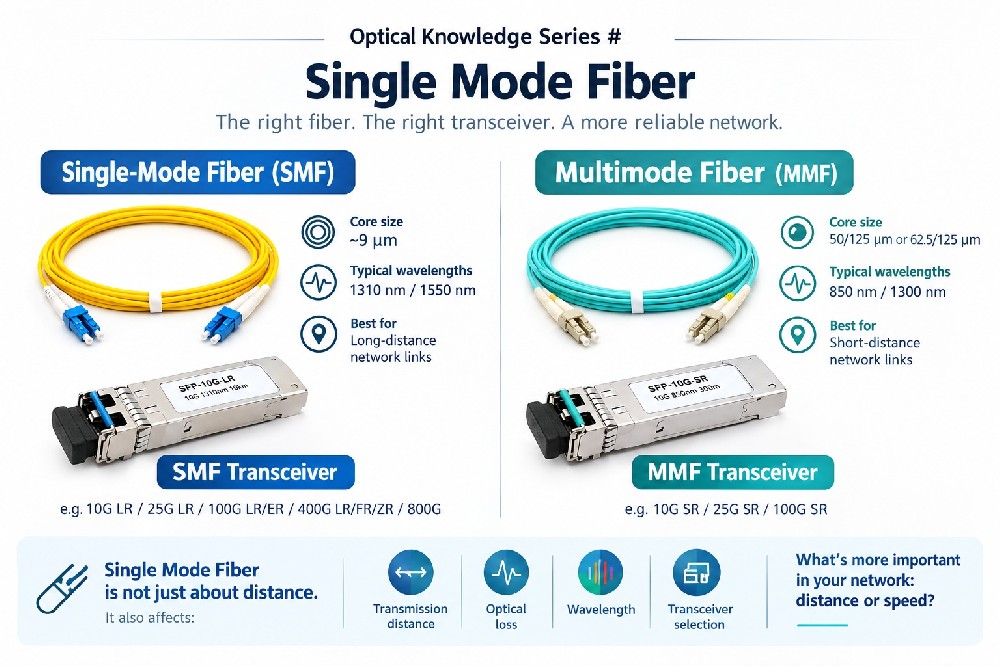
Single-mode fiber
Multi-mode fiber
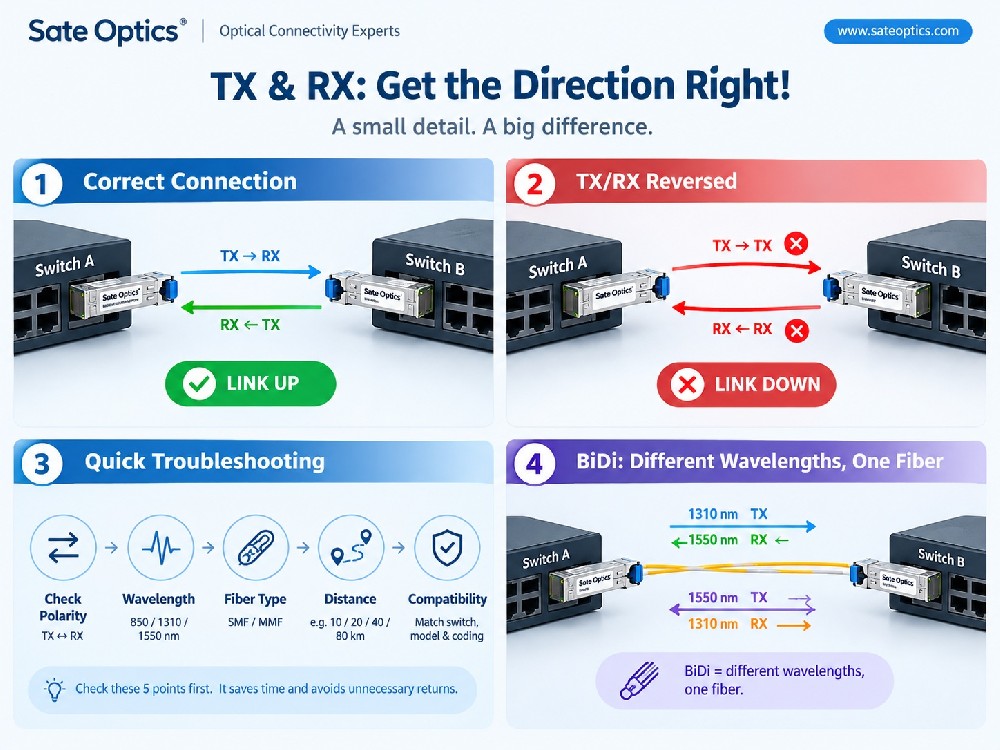
BiDi optical transmission
CWDM and DWDM networking
This flexibility makes SFP ports one of the most versatile components in enterprise networking.
1. Empty SFP Ports Make Future Expansion Easy
One of the primary reasons manufacturers include unused SFP ports is scalability.
Most business networks continue to grow over time.
Today's deployment may only require two uplinks, but future expansion could include:
Additional switches
New servers
Storage systems
Firewalls
Backup links
Disaster recovery connections
Instead of replacing the switch, administrators simply install another compatible SFP module into an available port.
This significantly reduces upgrade costs while extending the lifespan of existing network equipment.
2. Different Projects Require Different Connection Types
Not every network is built the same way.
Some installations require short-distance copper connections.
Others need long-distance fiber links between buildings or data centers.
The same SFP port can support multiple transmission options simply by changing the transceiver.
Examples include:
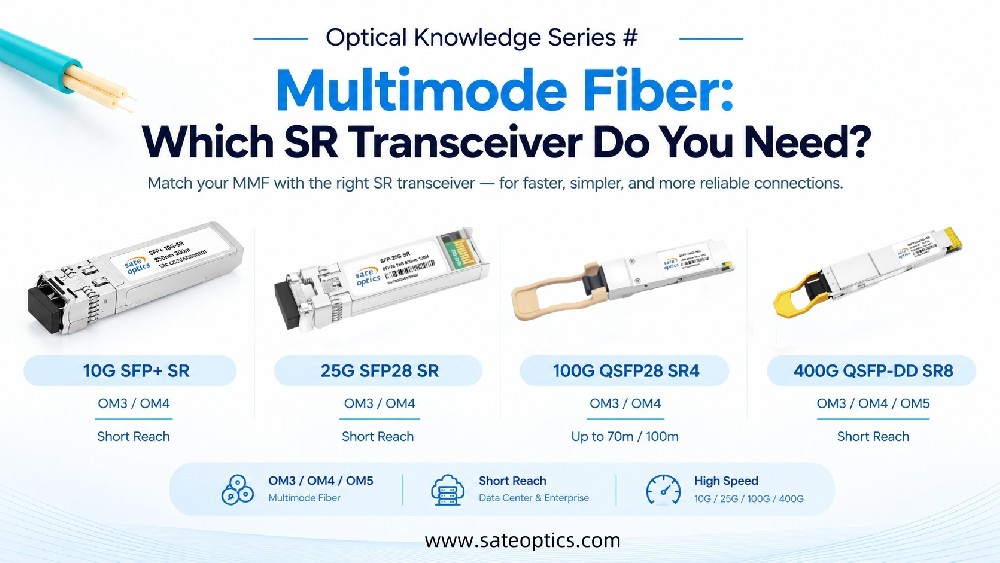
10G SFP+ SR for short-range multimode fiber
10G SFP+ LR for 10 km single-mode fiber
25G SFP28 SR for high-density server connections
100G QSFP28 SR4 for data center spine-leaf architecture
100G QSFP28 LR4 for long-distance backbone links
400G QSFP-DD FR4 for next-generation cloud infrastructure
The switch hardware remains unchanged while the optical module determines speed, distance, and media type.
3. SFP Ports Support Multiple Transmission Distances
Unlike RJ45 Ethernet ports, which are generally limited to 100 meters over twisted-pair copper cable, SFP ports can support a wide range of transmission distances.
Depending on the selected module, links may reach:
300 meters
550 meters
2 kilometers
10 kilometers
20 kilometers
40 kilometers
80 kilometers
120 kilometers or more
This flexibility makes SFP-based networking suitable for everything from office LANs to metropolitan and telecom backbone networks.
4. One Switch Can Support Many Network Architectures
Modern enterprise switches are designed to operate in diverse environments.
The same switch model may be deployed in:
Data centers
Enterprise campuses
Internet service providers
Manufacturing facilities
Hospitals
Universities
Surveillance systems
Each environment has different connectivity requirements.
Instead of producing separate switch models for every application, manufacturers provide modular SFP ports that allow customers to choose the most appropriate transceiver.
5. Spare SFP Ports Improve Network Reliability
Many experienced network engineers intentionally leave several SFP ports unused.
These reserved ports can quickly be activated when unexpected situations arise.
For example:
Adding a temporary server
Creating a redundant uplink
Replacing a failed fiber connection
Expanding rack capacity
Migrating to higher bandwidth
Having available SFP ports minimizes downtime and simplifies network maintenance.
6. SFP Ports Simplify Network Upgrades
Bandwidth requirements continue to increase.
Many organizations have already migrated:
1G → 10G
10G → 25G
25G → 100G
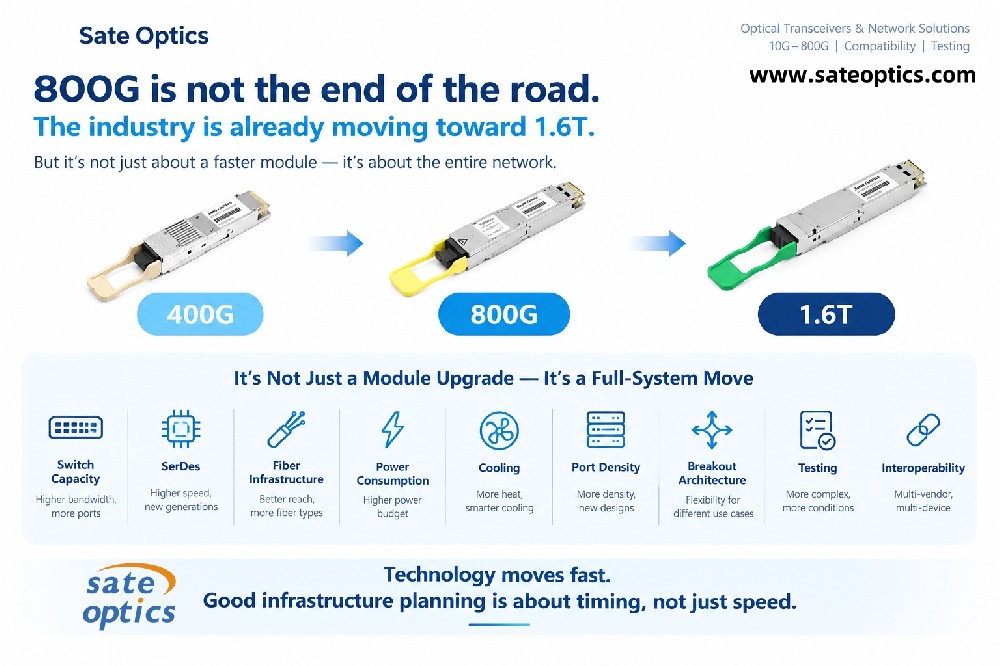
100G → 400G
400G → 800G
In many cases, upgrading involves changing compatible transceivers and cabling while keeping the existing switch platform (provided the hardware supports the target speed).
This modular approach reduces capital expenditure and protects long-term infrastructure investments.
Common Applications of SFP Ports
Different industries benefit from SFP technology in different ways.
Data Centers
Spine-leaf networking
Server aggregation
Storage networking
High-density switching
Enterprise Networks
Core-to-access uplinks
Building-to-building fiber links
Campus backbone connectivity
Internet Service Providers (ISPs)
Metro Ethernet
Fiber access networks
Aggregation switches
Industrial Ethernet
Manufacturing automation
Smart factories
Outdoor communication cabinets
Security & Surveillance
IP camera aggregation
Long-distance video transmission
Centralized monitoring systems
Recommended Sate Optics Solutions
Sate Optics provides a complete portfolio of compatible optical connectivity products for enterprise and data center deployments.
Popular models include:
1G Optical Modules
Cisco GLC-SX-MMD Compatible
Cisco GLC-LH-SMD Compatible
Cisco GLC-BX-U
Cisco GLC-BX-D
10G SFP+
Cisco SFP-10G-SR Compatible
Cisco SFP-10G-LR Compatible
Cisco SFP-10G-ER Compatible
Cisco SFP-10G-ZR Compatible
25G SFP28
Cisco SFP-25G-SR-S Compatible
Cisco SFP-25G-LR-S Compatible
100G QSFP28
Cisco QSFP-100G-SR4-S Compatible
Cisco QSFP-100G-LR4-S Compatible
Cisco QSFP-100G-ER4-S Compatible
400G QSFP-DD
QDD-400G-SR8 Compatible
QDD-400G-DR4 Compatible
QDD-400G-FR4 Compatible
QDD-400G-LR4 Compatible
800G OSFP
OSFP-800G-SR8
OSFP-800G-DR8
OSFP-800G-2×FR4
Additional products include:
DAC Cables
AOC Cables
MPO/MTP Fiber Cables
CWDM & DWDM Modules
MUX/DEMUX Solutions
All products are 100% compatibility tested and support major networking platforms including Cisco, Juniper, HPE, Aruba, Dell, Huawei, Nokia, Arista, and more.
Frequently Asked Questions (FAQ)
Why are SFP ports empty on many switches?
They are intentionally reserved for future expansion, redundant links, or project-specific connectivity. Empty SFP ports allow network administrators to add new fiber or high-speed connections without replacing the switch.
Should every SFP port be populated?
No. Most deployments only require the ports needed for current network traffic. Keeping spare SFP ports available provides flexibility for future upgrades and maintenance.
Can I leave an SFP port empty?
Yes. An unused SFP port does not negatively affect switch performance and is designed to remain empty until needed.
Can different types of SFP modules be used on the same switch?
In many cases, yes. Depending on the switch model and supported specifications, a single switch can use different module types such as SR, LR, BiDi, CWDM, or RJ45 SFP modules simultaneously.
Are SFP ports better than RJ45 ports?
Neither is universally better. RJ45 ports are ideal for standard Ethernet connections over copper, while SFP ports provide greater flexibility by supporting different media types, transmission distances, and network speeds.
Conclusion
Empty SFP ports are not unused—they are a deliberate part of modern network design.
Their modular architecture allows organizations to expand networks, support different transmission media, and upgrade bandwidth without replacing existing infrastructure.
Whether you're deploying a small enterprise LAN or building a hyperscale data center, SFP ports provide the flexibility needed to adapt as your network evolves.
Contact Sate Optics for Reliable Optical Connectivity Solutions
Planning a new network deployment or upgrading your existing infrastructure?
Sate Optics offers a comprehensive range of compatible optical transceivers, DAC cables, AOC cables, MPO solutions, and CWDM/DWDM products designed for enterprise, telecom, and data center applications.
Our experienced team can help you choose the right solution based on your switch model, transmission distance, bandwidth requirements, and budget.
Contact us today to discuss your project, request compatibility guidance, or receive a fast quotation. We're committed to delivering reliable, high-performance optical connectivity solutions tailored to your network.
Previous:Why Optical Module Deployments Fail: 5 Common Mistakes and How to Avoid Them
Next:Can You Mix Different SFP Brands in the Same Switch? Complete Guide