
Why Optical Module Deployments Fail: 5 Common Mistakes and How to Avoid Them
2026-08-03 10:12:02
Why Optical Module Deployment Matters
Deploying optical transceivers may appear straightforward, but many network failures occur during installation rather than because of defective hardware.
Whether you're upgrading an enterprise network, expanding a data center, or building a telecom backbone, proper optical module selection and deployment are essential for maintaining stable, high-speed communication.
At SATE Optics, we have supported compatibility solutions for global customers for more than 20 years. One lesson remains consistent:
Most optical module issues are preventable with proper planning, compatibility verification, and installation practices.
This article explores five of the most common deployment mistakes and explains how to avoid them.
1. Selecting the Wrong Optical Module
One of the most common mistakes is selecting a module based solely on transmission distance.
For example, a 10G SFP+ LR rated for 10 km may not always deliver reliable performance if the optical link contains multiple patch panels, aged fiber, or excessive connector loss.
Instead of checking only the transmission distance, engineers should calculate the total optical power budget.
Recommended Models
Cisco Compatible GLC-LH-SMD
Cisco Compatible GLC-ZX-SM
10G SFP+ LR
25G SFP28 LR
100G QSFP28 LR4
400G QSFP-DD FR4
2. Ignoring Device Compatibility
Many buyers assume that "Cisco Compatible" means universal compatibility.
In reality, compatibility depends on several factors, including:
Switch model
Hardware revision
Operating system version
Network interface firmware
Always verify compatibility before placing bulk orders.
3. Overlooking DOM/DDM Monitoring
Modern optical transceivers support Digital Optical Monitoring (DOM/DDM), allowing engineers to monitor:
TX Optical Power
RX Optical Power
Laser Bias Current
Module Temperature
Supply Voltage
Regular monitoring helps detect signal degradation before it affects network services.
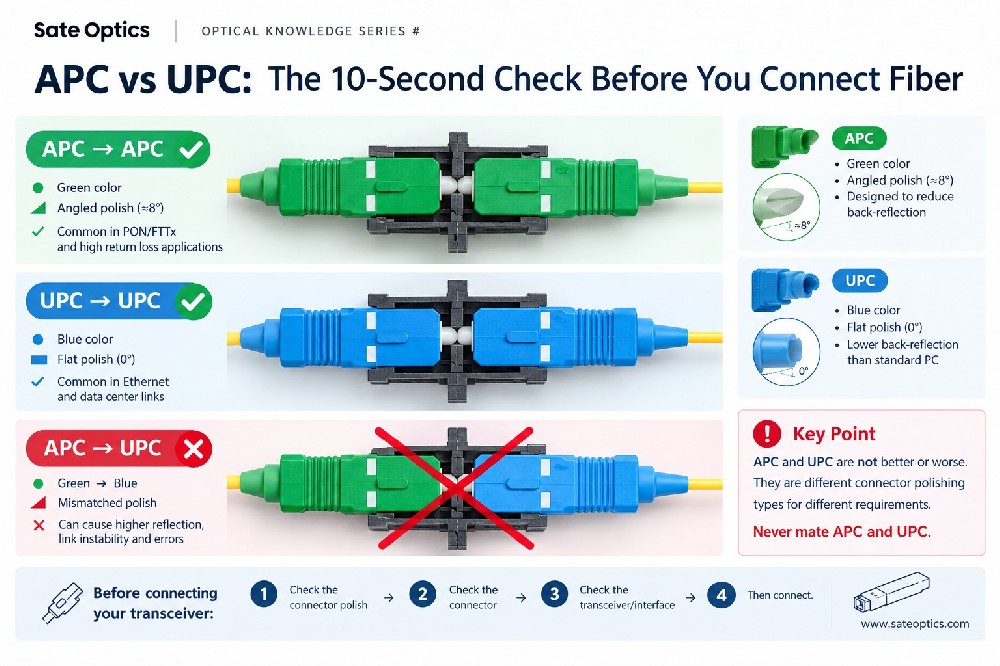
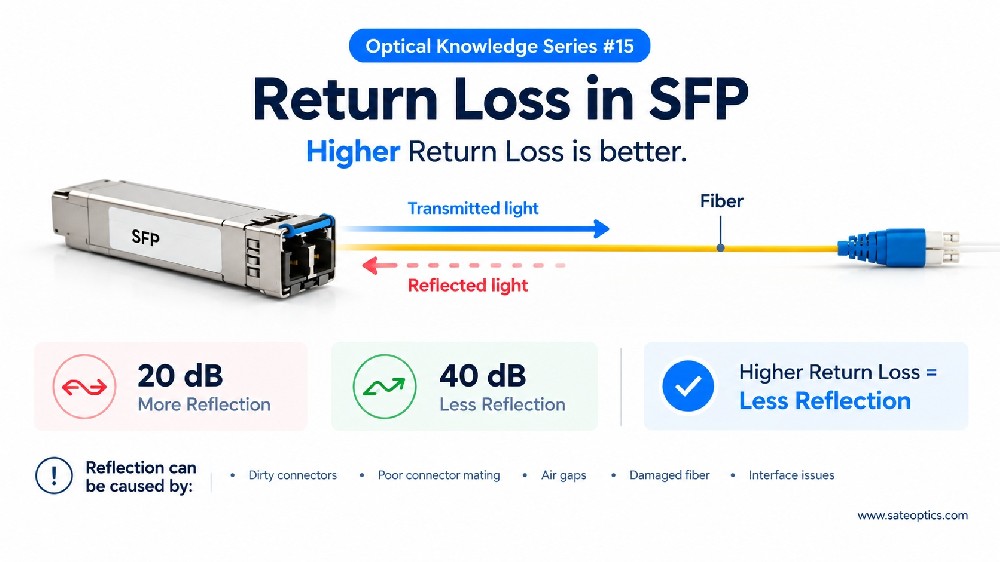
4. Installing Dirty Fiber Connectors
Dust contamination remains one of the leading causes of unexpected link failures.
Even microscopic particles can increase insertion loss and reduce optical performance.
Before installation, inspect and clean every connector using appropriate fiber cleaning tools.
5. Choosing Based Only on Price
The lowest purchase price does not always result in the lowest overall project cost.
Reliable compatibility testing, stable component sourcing, consistent quality control, and responsive technical support often reduce long-term operational costs.
When evaluating suppliers, consider:
Compatibility testing
Production consistency
Warranty
Technical support
Delivery capability
Recommended Optical Transceiver Types
Choosing the right optical module depends on network speed, transmission distance, and interface requirements.
| Network Speed | Common Module | Typical Distance | Application |
|---|---|---|---|
| 1G | GLC-SX-MMD | 550m | Enterprise LAN |
| 1G | GLC-LH-SMD | 10km | Campus Network |
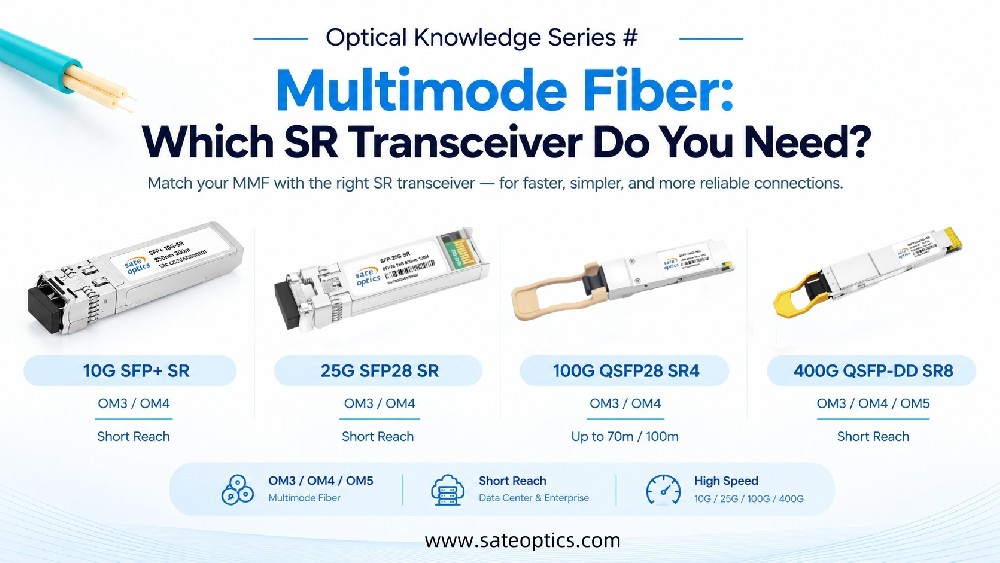
| 10G | SFP+ SR | 300m | Data Center |
| 10G | SFP+ LR | 10km | Enterprise Backbone |
| 25G | SFP28 SR | 100m | Cloud Computing |
| 100G | QSFP28 SR4 | 100m | Spine-Leaf Network |
| 100G | QSFP28 LR4 | 10km | Metro Network |
| 400G | QSFP-DD SR8 | 100m | AI Cluster |
| 400G | QSFP-DD FR4 | 2km | Modern Data Center |
Typical Applications
SATE Optics compatible optical transceivers are widely deployed in:
Enterprise Networks
Cloud Data Centers
AI Computing Infrastructure
Internet Service Providers (ISP)
Telecom Networks
Campus Networks
Government Projects
Financial Institutions
Healthcare Networks
Smart Manufacturing
Whether upgrading legacy Gigabit infrastructure or deploying next-generation 400G networks, selecting the right optical module significantly improves network reliability.
Why Work with SATE Optics?
At SATE Optics, we provide OEM-compatible optical transceivers designed for stable interoperability with leading networking platforms.
Our solutions include:
1G to 800G Optical Transceivers
Cisco Compatible Optical Modules
Juniper Compatible Modules
Arista Compatible Modules
Huawei Compatible Modules
Dell Compatible Modules
NVIDIA / Mellanox Compatible Modules
DAC & AOC Cables
CWDM / DWDM Solutions
Every module undergoes compatibility programming and performance testing before shipment to help customers reduce deployment risks.
Conclusion
Most optical module deployment problems can be prevented through proper planning, compatibility verification, and routine maintenance.
Rather than replacing hardware immediately when a network issue occurs, engineers should first evaluate link budget, connector cleanliness, compatibility, and DOM/DDM monitoring data.
Small improvements during deployment often result in greater long-term network reliability.
Frequently Asked Questions (FAQ)
How do I know which optical module is compatible with my switch?
Check the exact switch model, software version, and interface requirements. Compatibility varies between hardware revisions and vendors.
What is DOM/DDM in an optical transceiver?
DOM (Digital Optical Monitoring), also known as DDM (Digital Diagnostic Monitoring), provides real-time information such as transmit power, receive power, temperature, voltage, and laser bias current to help monitor module health.
Can I use a longer-distance optical module on a shorter fiber link?
In many cases, yes, but the optical power budget should always be evaluated. Excessive receive power may require the use of an optical attenuator.
What is the difference between SFP, SFP+, SFP28 and QSFP28?
SFP supports 1G, SFP+ supports 10G, SFP28 supports 25G, while QSFP28 is commonly used for 100G Ethernet applications.
Why do compatible optical modules sometimes fail to connect?
Common causes include firmware incompatibility, unsupported hardware revisions, dirty fiber connectors, or incorrect module coding—not necessarily defective hardware.
Contact SATE Optics for Reliable Optical Connectivity Solutions
Whether you need Cisco-compatible SFP modules, 100G QSFP28 transceivers, 400G QSFP-DD optics, or customized compatibility solutions for enterprise, telecom, or data center deployments, SATE Optics is ready to help.
Contact our technical team today to discuss your project requirements, request compatibility recommendations, or receive expert guidance on selecting the right optical transceiver for your network.
Previous:Why Can't Fiber Optic Cables Be Bent Too Much? | Bend Radius, Signal Loss & SFP Troubleshooting
Next:Why Do Some Network Switches Have Empty SFP Ports? The Real Reason Behind Modular Network Design