
OFC 2026: The Industry Moves Toward 1.6T Optical Connectivity
2026-09-28 19:07:10
OFC 2026: The Industry Moves Toward 1.6T Optical Connectivity
The optical networking industry is moving into its next bandwidth generation.
At OFC 2026 in Los Angeles, 1.6T optical connectivity emerged as one of the clearest technology directions, alongside continued development of 800G, 224G/lane and 448G/lane technologies, lower-power optical architectures, co-packaged optics (CPO), optical I/O, and advanced silicon photonics.
The message from OFC 2026 was not simply that optical speeds are getting faster.
It is that AI infrastructure is changing the requirements for optical connectivity — from bandwidth and port speed to power efficiency, interoperability, signal integrity, and deployment readiness.
From 800G to 1.6T
For the past several years, 800G has been a major focus of high-speed data center networking.
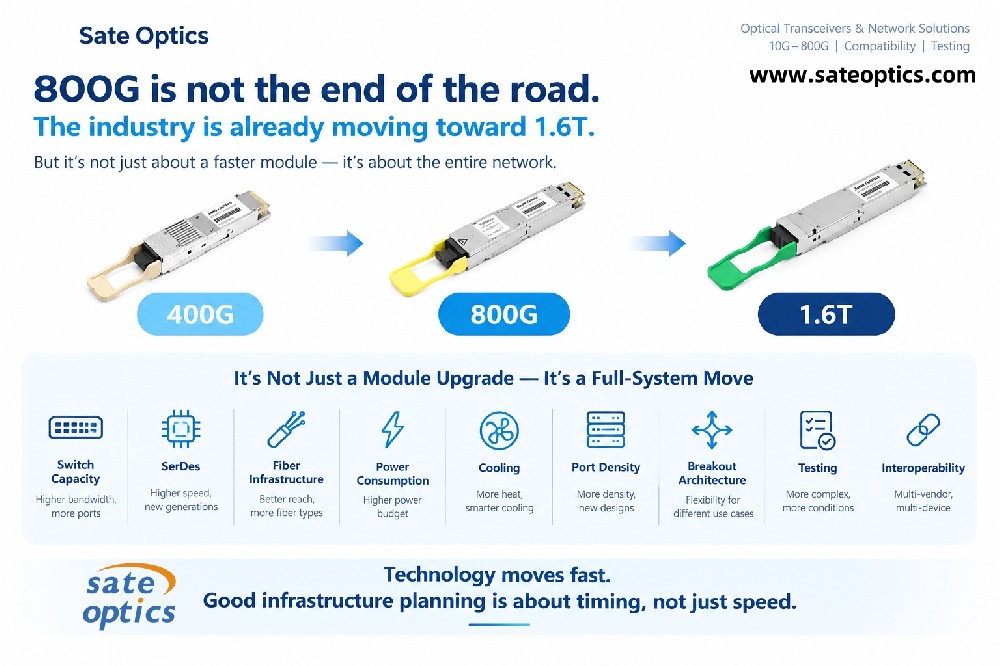
Now, the industry is increasingly looking at 1.6T as the next major step in data center optical connectivity.
OFC 2026 itself highlighted 1.6T as a major area of commercial focus, with exhibitors demonstrating technologies and platforms designed for the transition from 800G toward 1.6T. The conference also identified higher electrical lane speeds, including 224G and progress toward 448G, as important parts of this evolution.
The basic idea is straightforward:
800G → 1.6T
But achieving twice the aggregate bandwidth is not simply a matter of putting more lanes into a module.
The industry is also working on higher-speed electrical interfaces, advanced DSPs, silicon photonics, improved thermal management, lower power consumption, and new optical architectures.
Why 1.6T Matters for AI Data Centers
AI workloads are creating increasingly demanding communication requirements inside data centers.
Large-scale GPU clusters need high-bandwidth connections not only between servers, but also across switches and different parts of the AI network fabric.
As the number of GPUs and accelerators increases, the network has to move more data without allowing connectivity to become a bottleneck.
This is where higher-speed optical connectivity becomes important.
A 1.6T optical interface can provide twice the aggregate bandwidth of an 800G interface, allowing network designers to increase bandwidth density while potentially reducing the number of physical interfaces required for a given aggregate capacity.
At OFC 2026, multiple companies demonstrated or announced technologies specifically targeting 1.6T AI and data-center connectivity.
For example, Marvell presented a 1.6T optical DSP platform based on 200G-per-lane PAM4, while other exhibitors demonstrated 1.6T transceiver architectures and silicon-photonics solutions.
This illustrates an important point:
The move to 1.6T is not driven by one component. It requires an entire ecosystem to evolve together.
200G per Lane Is a Key Step
One of the important technical developments behind 1.6T is the move toward 200G per electrical/optical lane.
An 8-lane architecture using 200G per lane can reach:
8 × 200G = 1.6T
This is a significant evolution from earlier generations of optical connectivity.
For comparison:
| Generation | Typical Lane Rate | Aggregate Bandwidth |
|---|---|---|
| 100G | 25G/lane | 100G |
| 400G | 100G/lane | 400G |
| 800G | 100G/lane or 200G/lane | 800G |
| 1.6T | 200G/lane | 1.6T |
The exact architecture depends on the transceiver, DSP, electrical interface, modulation technology, and application.
OFC 2026 demonstrations showed that the industry is actively moving toward 200G-per-lane PAM4 architectures for 1.6T optical connectivity. Acacia, Marvell and other companies highlighted 1.6T DSP and transceiver technologies during the event.
1.6T Is More Than a Faster Transceiver
One of the most important takeaways from OFC 2026 is that higher bandwidth alone is not enough.
At 1.6T, several technical factors become increasingly important.
1. Power Efficiency
More bandwidth can also mean more power consumption.
For large AI clusters with thousands of optical interfaces, even a small increase in power per port can become significant at system level.
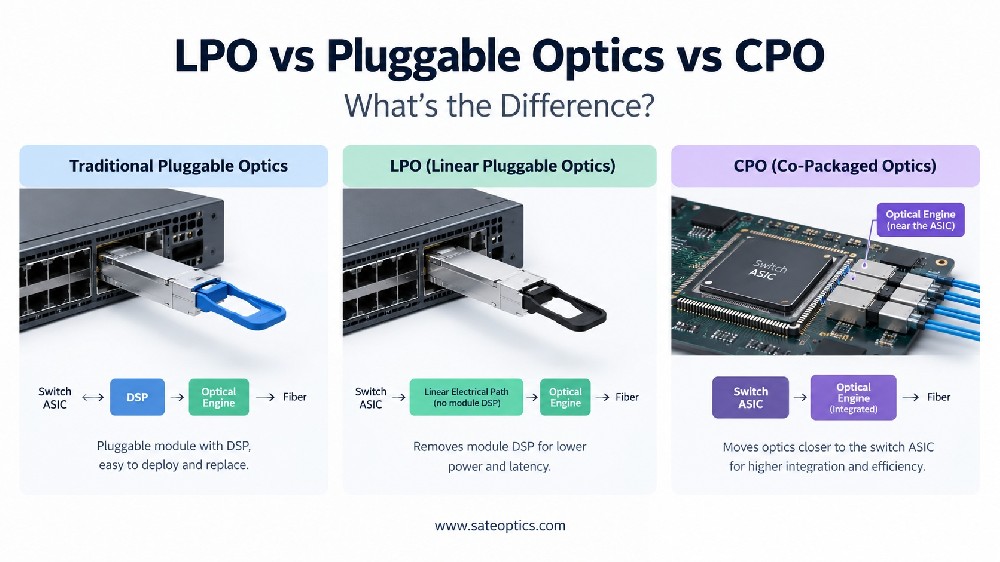
This is why OFC 2026 placed considerable attention on lower-power architectures, including LPO, transmit-retimed optics (TRO), co-packaged optics and optical I/O.
The industry is therefore not simply asking:
How fast can the link run?
It is increasingly asking:
How much bandwidth can we deliver per watt?
2. Signal Integrity
At 200G per lane, electrical and optical signal integrity becomes increasingly demanding.
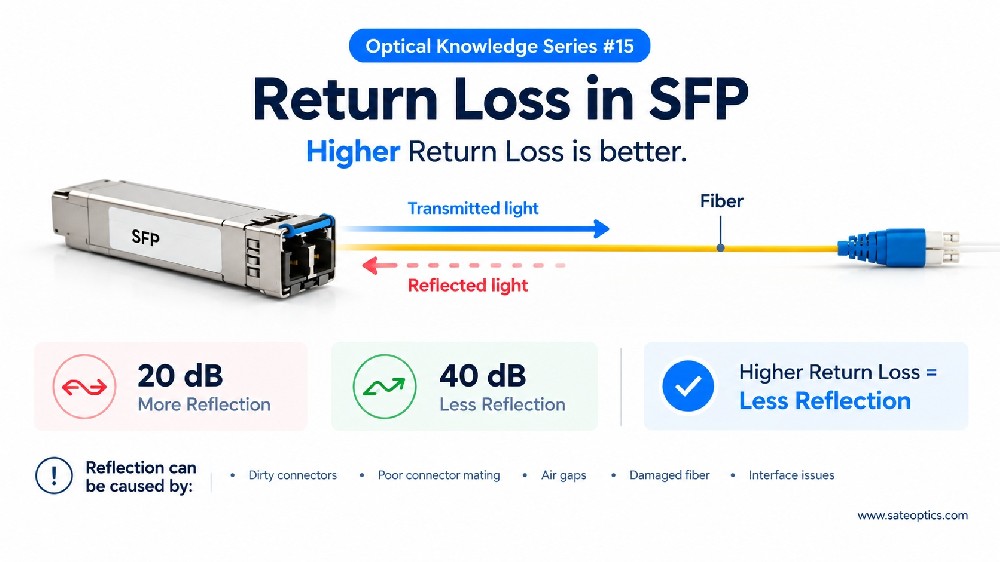
Higher-speed PAM4 links are more sensitive to channel loss, noise, crosstalk, reflections and other impairments.
This puts more pressure on:
DSP performance
PCB and connector design
electrical channel quality
optical engine design
thermal management
manufacturing consistency
In other words, 1.6T pushes the entire link — not just the optical module — to a higher performance level.
3. Interoperability
AI networks are built from multiple layers and often involve equipment from different vendors.
A high-speed optical module therefore cannot be evaluated only by its nominal data rate.
Compatibility, electrical interfaces, optical specifications, FEC behavior, host platform support, and interoperability all become increasingly important.
OFC 2026 specifically emphasized that reliability at AI scale depends on interoperability, standardization and system-level performance, rather than individual components alone.
4. Thermal Management
Higher-speed optical components also increase the importance of thermal design.
This becomes particularly relevant when optical modules are deployed at high density.
As data center operators increase the number of 800G and 1.6T ports, the optical module cannot be considered independently from:
switch → module → fiber → module → switch
The complete connectivity path has to work within the system's power, thermal and optical budgets.
1.6T Optical Connectivity Is Already Moving Beyond the Roadmap
It is important to distinguish between technology development and large-scale deployment.
Not every data center is moving directly from 800G to 1.6T today.
However, OFC 2026 provided evidence that 1.6T is moving beyond purely theoretical discussion.
Several companies announced 1.6T transceiver, DSP and silicon-photonics developments around the event.
For example, Centera Photonics announced a 1.6Tbps DR8 LPO transceiver, while Hyper Photonix demonstrated a 1.6T silicon-photonics transceiver platform based on 200G-per-lane technology.
Marvell also stated that its 1.6T Ara platform was already shipping in volume to global customers, while introducing additional 1.6T DSP technologies at OFC 2026.
These developments do not mean that 1.6T has replaced 800G.
Instead, they show that the industry is building the technology and ecosystem required for the next generation of AI networking.
800G Is Still an Important Part of the Transition
The move toward 1.6T does not make 800G obsolete.
In practice, the two generations are likely to coexist for some time.
Different data center architectures have different requirements for:
bandwidth
reach
power
port density
switch capacity
optical budget
system compatibility
deployment cost
For many applications, 800G remains an important high-speed connectivity option.
At the same time, 1.6T is becoming increasingly relevant for next-generation AI infrastructure where higher bandwidth density is required.
This means network teams may need to manage multiple generations of optical connectivity at the same time, rather than making a single immediate transition.
What Changes for Optical Module Evaluation?
As optical speeds increase, the evaluation process also needs to become more systematic.
For a 1.6T optical solution, the key question should not simply be:
“Does it support 1.6T?”
A more complete evaluation should consider:
Host Compatibility
Does the module work with the intended switch, NIC, accelerator or networking platform?
Electrical Interface
Does the host platform support the required lane rate and electrical architecture?
Optical Architecture
What are the lane configuration, wavelength plan, fiber type and connector requirements?
Power Consumption
What is the actual module power under the intended operating conditions?
Thermal Environment
Can the module operate reliably within the system's thermal limits?
FEC and Link Configuration
Are the host-side settings and FEC requirements aligned?
Interoperability
Has the complete link been validated rather than only testing the module independently?
Diagnostics
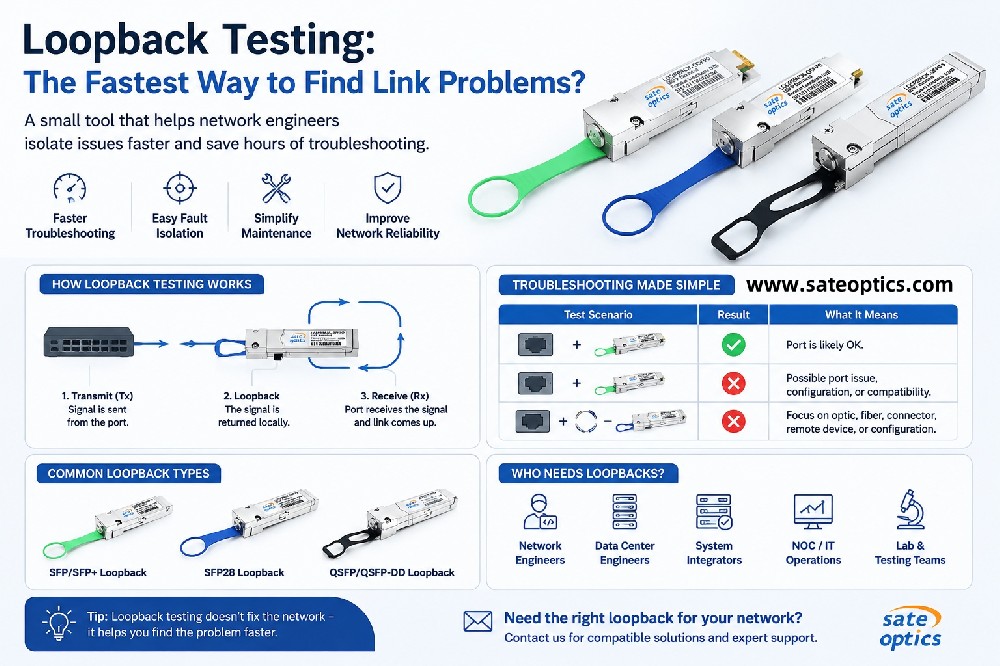
What monitoring and diagnostic information is available for troubleshooting?
This approach becomes increasingly important as the industry moves from 800G toward 1.6T.
The Bigger Picture: From Bandwidth to System Efficiency
The most interesting development at OFC 2026 may not be the number “1.6T” itself.
It is the shift in how the industry evaluates optical connectivity.
At lower speeds, discussions often focus primarily on:
speed + distance + compatibility
At 800G and beyond, the conversation becomes broader:
bandwidth + power + thermal + signal integrity + interoperability + deployment readiness
This is especially important for AI infrastructure, where thousands of high-speed links may operate simultaneously.
The optical link is becoming an increasingly important part of the overall computing system.
What Comes Next?
The transition toward 1.6T is likely to continue alongside several other technology developments:
200G-per-lane PAM4
224G and future 448G electrical interfaces
LPO and TRO architectures
silicon photonics
co-packaged optics (CPO)
optical I/O
higher-density optical engines
1.6T pluggable transceivers
continued development of 800G solutions
OFC 2026 also highlighted research and commercial activity around even higher-capacity technologies, including 3.2T coherent interfaces and advanced multi-band and spatial-division approaches.
The direction is clear: the optical industry is preparing for a bandwidth environment far beyond today's 800G networks.
From 800G to 1.6T: The Transition Has Started
OFC 2026 showed that 1.6T is no longer simply a future data rate on an industry roadmap.
It is becoming a practical technology direction supported by advances in DSPs, 200G-per-lane architectures, silicon photonics, optical engines, lower-power designs and system-level validation.
But the transition will not happen simply because a faster module becomes available.
The real challenge is making the entire connectivity ecosystem work together reliably and efficiently.
For data center operators, network engineers and optical buyers, the next generation of connectivity will therefore be about more than bandwidth.
It will be about how efficiently, reliably and consistently that bandwidth can be deployed at scale.
About Sate Optics
Sate Optics focuses on optical transceivers and network connectivity solutions for data centers, ISPs, enterprise networks and other high-speed networking environments.
Our product scope covers optical transceivers from 10G to 800G, together with DAC/AOC, fiber connectivity and related networking solutions.
As the industry moves toward higher-speed connectivity, we continue to follow developments in 800G, 1.6T and next-generation optical technologies, with a focus on compatibility, testing and practical deployment requirements.
Previous:Multimode Fiber and SR Transceivers: How to Choose the Right Combination
Next:No More