
The Future of 400G in Data Centers | Choosing the Right 400G Optical Transceiver
2026-07-14 11:03:47
The Future of 400G in Data Centers: Choosing the Right Solution Starts with Understanding Your Network
Data center networks are entering a new phase of growth.
The rapid expansion of AI workloads, cloud computing, high-performance storage, and large-scale data processing is creating increasing pressure on existing 100G infrastructure.
As a result, more organizations are planning their migration from 100G to 400G networks.
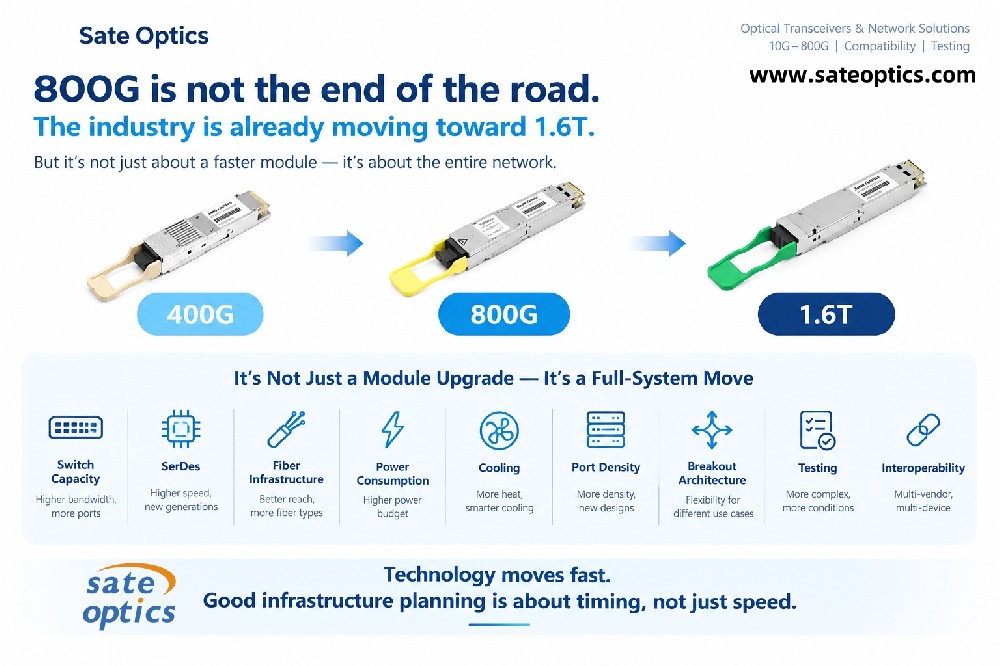
However, upgrading to 400G is not simply about choosing a higher-speed optical module.
The real challenge is:
How do you select the right 400G optical transceiver based on your network requirements, fiber infrastructure, and future expansion plans?
A successful 400G deployment requires a balance between:
Network performance
Compatibility
Deployment environment
Fiber infrastructure
Long-term scalability
Why Are Data Centers Moving Toward 400G?
Traditional 100G networks are becoming increasingly challenged by modern applications.
Today’s infrastructure must support:
1. AI and Machine Learning Infrastructure
AI training clusters require massive east-west traffic between:
GPU servers
Storage systems
High-performance computing nodes
400G connectivity provides higher bandwidth and lower congestion for AI data flows.
2. Cloud Data Center Expansion
Cloud providers and enterprise data centers need higher-density networking solutions to:
Increase rack capacity
Reduce network bottlenecks
Improve overall efficiency
400G Ethernet allows more bandwidth with fewer physical connections.
3. Data Center Interconnect (DCI)
Large organizations often connect multiple data centers across cities or regions.
400G optical solutions help support:
High-capacity backbone links
Long-distance transmission
Future network growth
What Should You Consider Before Choosing a 400G Optical Transceiver?
There is no single "best" 400G module for every network.
The right solution depends on several factors.
1. Transmission Distance
Distance is one of the most important selection criteria.
Different 400G optical transceiver solutions are designed for different link distances:
| Application Distance | Recommended Solution |
|---|---|
| Short-distance server connections | QSFP-DD 400G SR4 |
| Data center fabric connections | QSFP-DD 400G DR4 |
| Up to 2km connections | QSFP-DD 400G FR4 |
| Up to 10km connections | QSFP-DD 400G LR4 |
2. Fiber Infrastructure
Before upgrading to 400G, engineers should evaluate existing cabling.
Important questions include:
Is the network using multimode fiber (MMF) or single-mode fiber (SMF)?
Is the existing infrastructure based on MPO or duplex LC connectors?
Can current fiber cabling be reused?
Choosing the correct optical technology can simplify migration and reduce unnecessary changes.
3. Network Equipment Compatibility
A 400G optical module must work correctly with the connected hardware.
Common platforms include:
Data center switches
Routers
NIC adapters
AI cluster networking equipment
Compatibility testing is especially important when deploying third-party or alternative optical solutions.
Understanding Different 400G Optical Transceiver Options
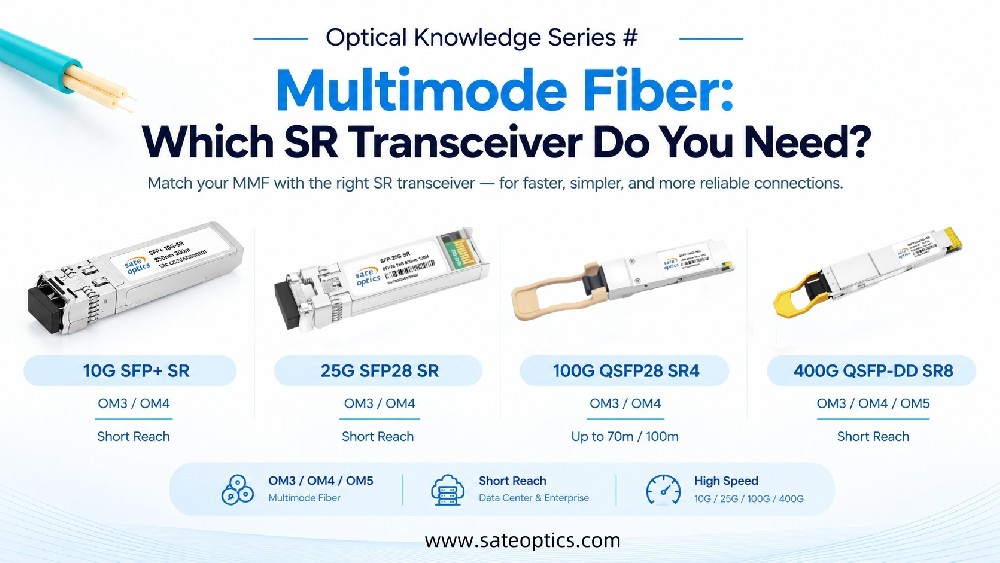
QSFP-DD 400G SR4
Application: Short-distance data center connections
Key features:
Designed for high-density connections
Uses parallel multimode fiber
Suitable for short-reach links inside data centers
Typical applications:
Server-to-switch connections
AI cluster interconnects
High-density data center environments
QSFP-DD 400G DR4
Application: Data center fabric and spine-leaf networking
Key features:
Uses single-mode fiber
Supports longer reach than SR4
Designed for high-performance data center architectures
Typical applications:
Leaf-spine networks
Large-scale enterprise data centers
Cloud infrastructure
QSFP-DD 400G FR4
Application: Medium-distance data center links
Key features:
Supports up to 2km transmission
Uses duplex LC fiber
Suitable for many modern data center upgrades
Typical applications:
Campus data centers
Data center interconnection
Enterprise backbone links
QSFP-DD 400G LR4
Application: Long-distance optical transmission
Key features:
Supports up to 10km reach
Designed for single-mode fiber networks
Suitable for extended connectivity
Typical applications:
Data center interconnect (DCI)
Metro networks
Large enterprise campuses
Common Mistakes When Planning a 400G Upgrade
Mistake 1: Choosing Based Only on Speed
400G does not automatically mean better performance.
The right module depends on:
Distance
Fiber type
Network architecture
Mistake 2: Ignoring Existing Fiber Infrastructure
A solution that requires completely replacing fiber cabling may increase project complexity.
Mistake 3: Selecting Hardware Without Compatibility Testing
Optical compatibility issues can cause:
Link failures
Deployment delays
Additional troubleshooting costs
How to Build a Future-Ready 400G Network
A reliable 400G migration strategy should include:
✅ Understanding current network requirements
✅ Selecting the appropriate optical technology
✅ Testing compatibility before deployment
✅ Considering future bandwidth growth
The goal is not simply to install faster optics.
The goal is to build a network that can support future applications.
FAQ: 400G Optical Transceiver Solutions
Q1: What is a 400G optical transceiver?
A 400G optical transceiver is a networking component that converts electrical signals into optical signals and supports data transmission at 400Gbps.
It is commonly used in:
Data centers
AI networks
Cloud infrastructure
High-performance computing environments
Q2: What is the difference between QSFP-DD 400G SR4 and FR4?
The main difference is transmission distance and fiber type.
QSFP-DD 400G SR4:
Short-distance application
Multimode fiber
Usually used inside data centers
QSFP-DD 400G FR4:
Up to 2km transmission
Single-mode fiber
Uses duplex LC connectivity
Q3: When should I choose QSFP-DD 400G LR4?
400G LR4 is suitable when the network requires longer transmission distances, such as:
Data center interconnect
Metro networks
Large campus deployments
It supports transmission distances up to 10km.
Q4: Can 400G optical modules support Cisco, Juniper, Arista, and other platforms?
Yes. Compatible 400G optical transceivers can be customized and coded for different network platforms, depending on equipment requirements.
Compatibility testing before deployment is recommended.
Q5: Is upgrading from 100G to 400G difficult?
The migration complexity depends on:
Existing switch hardware
Fiber infrastructure
Optical module selection
With proper planning, many organizations can upgrade gradually while minimizing disruption.
Build Your 400G Network with the Right Optical Solution
At Sate Optics, we help customers select suitable optical solutions based on:
Network architecture
Transmission distance
Fiber infrastructure
Equipment compatibility
Our 400G optical transceiver solutions include:
QSFP-DD 400G SR4
QSFP-DD 400G DR4
QSFP-DD 400G FR4
QSFP-DD 400G LR4
Whether you are upgrading an existing 100G network or planning a next-generation AI data center, our team can help you evaluate the right connectivity solution.
Need help choosing the right 400G optical transceiver for your network?
Contact Sate Optics for technical consultation and compatibility support.
Previous:AOC vs Fiber Optic Cable: What's the Difference and Which Should You Choose?
Next:Which Fiber Cable Should You Use with Your SFP? A Simple Guide to SX, LX, SR, LR and QSFP SR4