
Optical Transceiver Industry Trend: Are You Using the RIGHT Module — or Just the NEWEST One?
2026-02-05 22:30:24
🚀 Optical Transceiver Industry Trend: Are You Using the RIGHT Module — or Just the NEWEST One?
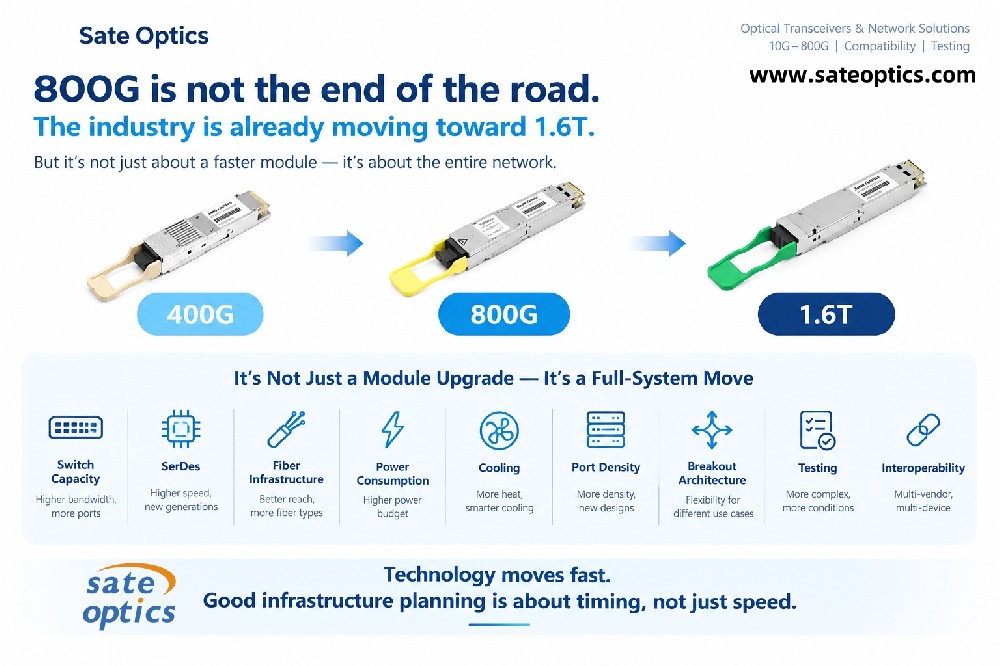
This timeline tells a simple truth 👇
Optical transceivers evolve because networks change — not because specs look better on paper.
From 1G → 10G → 40G → 100G → 400G → 800G,
the real question for buyers is always:
👉 Which module actually fits my network application?
❌ What we see in real projects
Many customers face these problems:
Overpaying for higher speed modules they don’t fully use
Buying incompatible form factors → deployment delays
Unstable supply → project timelines at risk
High power modules → thermal issues in racks
✅ What smart buyers do differently
They choose optical modules based on:
✔ Network architecture
✔ Transmission distance
✔ Power & heat limits
✔ Budget & delivery timeline
That’s why today’s market is not “one-speed-fits-all”:
10G / 25G → Access & enterprise networks
100G → Aggregation & metro
400G / 800G → Data center spine & AI clusters
🔧 Where we help
We don’t just sell optical modules —
we help customers match the right transceiver to the right application:
Cost-effective alternatives to branded optics
Fast delivery & stable supply
Customized solutions for real network scenarios
📩 Planning a network upgrade or expansion?
Choosing the right optical module can save cost, power, and time — before installation even starts.
👉 Follow us to see how optical transceivers are applied in real data center & telecom projects, not just datasheets.
🔖 #OpticalTransceivers #NetworkUpgrade #DataCenterSolutions #400G #800G #QSFPDD #OSFP #TelecomInfrastructure #CloudNetworking #FiberOpticSolutions
Previous:10G Optical Module Guide: Compare LRM, SR, LR, ER, ZR for the Right Choice
Next:📡 What Are SFPs in Telecom — and Why They Matter More Than You Think