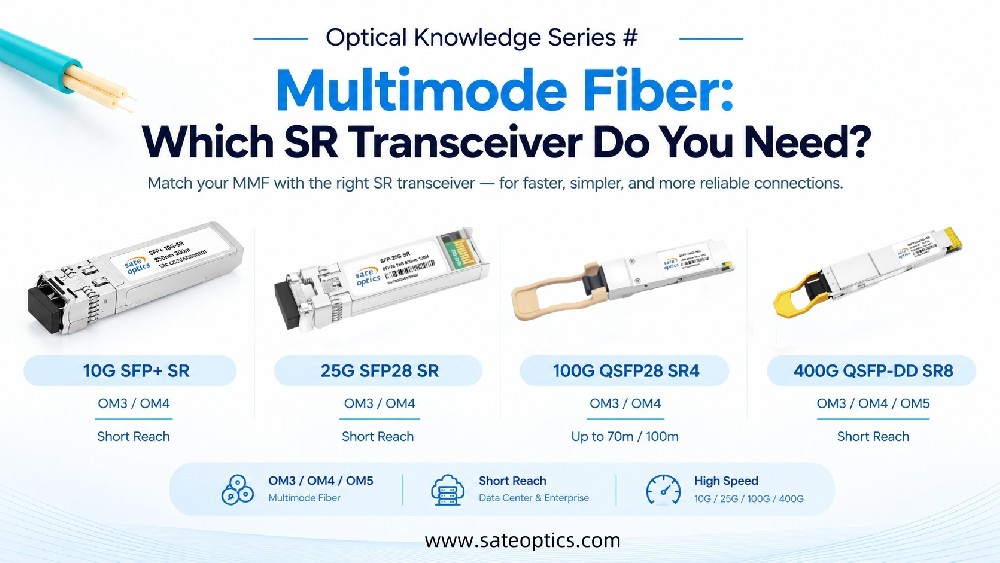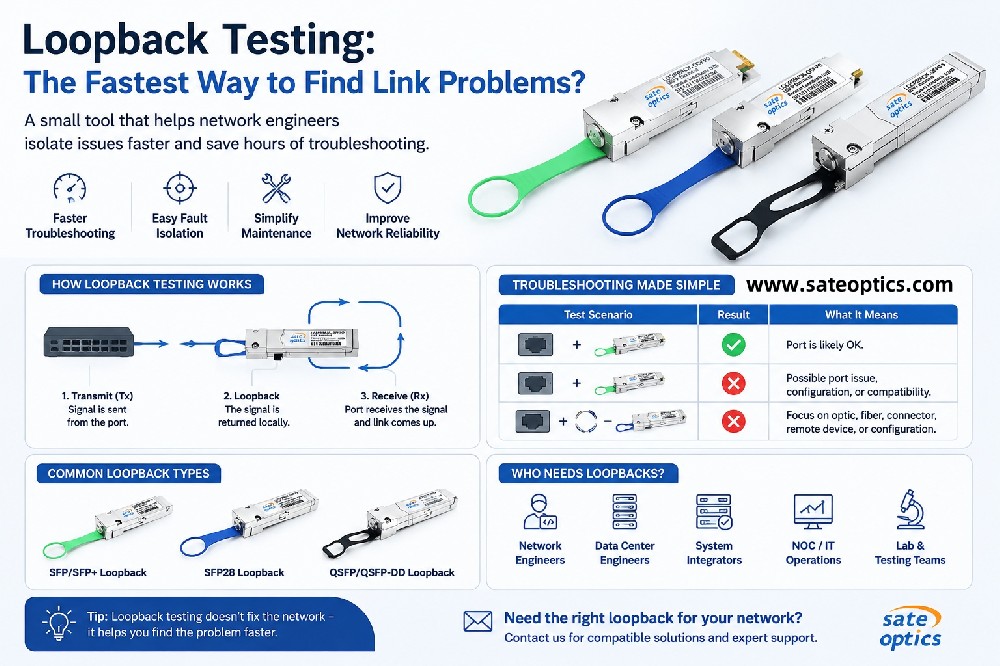

Understanding Optical Transceiver Types: SFP, SFP+, QSFP28, QSFP-DD, QSFP112 & OSFP Explained
2026-07-10 12:45:53
Understanding Optical Transceiver Types: A Simple Guide to SFP, QSFP28, QSFP-DD, QSFP112 and OSFP
Choosing an optical transceiver shouldn't feel confusing.
Yet many engineers and IT buyers encounter model names like SFP, SFP+, QSFP28, QSFP-DD, QSFP112, and OSFP without immediately knowing what makes them different.
The good news is that these naming conventions become much easier to understand once you learn one simple concept.
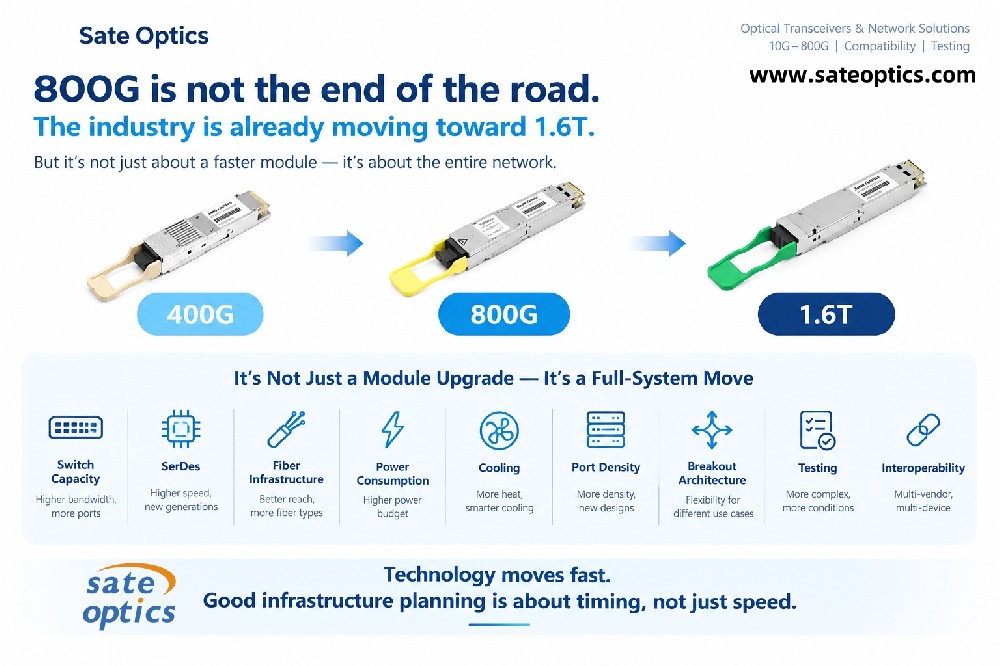
Bandwidth is achieved by increasing the number of lanes, the speed of each lane, or a combination of both.
This guide explains the most common optical transceiver types in simple terms and shows where each one is typically used.
Think of Optical Transceivers Like Highways
Imagine data traveling on a highway.
A network can carry more traffic by:
Adding more lanes
Increasing the speed of each lane
Or combining both approaches
Modern optical transceivers follow the same principle.
That's why newer generations provide significantly higher bandwidth without changing the basic concept.
Single-Lane Transceivers
Single-lane modules remain the foundation of many enterprise and campus networks.
Typical products include:
| Form Factor | Typical Speed | Example Model |
|---|---|---|
| SFP | 1G | SFP-1G-LX |
| SFP+ | 10G | SFP-10G-LR |
| SFP28 | 25G | SFP28-25G-LR |
Typical Applications
Enterprise LAN
Campus networks
Access switches
Server connections
Industrial Ethernet
These modules are widely deployed because they offer excellent compatibility, low power consumption, and cost-effective upgrades.
Four-Lane Transceivers
As data center traffic increased, engineers combined multiple lanes into a single transceiver.
Typical products include:
| Form Factor | Typical Speed | Example Model |
|---|---|---|
| QSFP+ | 40G | QSFP-40G-ER4 |
| QSFP28 | 100G | QSFP28-100G-LR4 |
| QSFP-DD | 400G | QSFPDD-400G-LR4 |
Typical Applications
Leaf-Spine architecture
Cloud computing
High-performance computing (HPC)
Enterprise data centers
Storage networking
High-Density Transceivers
The rapid growth of AI, cloud computing, and hyperscale infrastructure has driven demand for even higher bandwidth.
Common form factors include:
| Form Factor | Typical Speeds |
|---|---|
| QSFP-DD | 200G / 400G |
| OSFP | 400G / 800G |
Examples include:
QSFP-DD-400G-FR4
QSFP-DD-400G-LR4
OSFP-800G-DR8
OSFP-800G-2FR4
Typical Applications
AI clusters
GPU networking
Hyperscale data centers
Cloud service providers
High-density Ethernet fabrics
One Simple Rule to Remember
Instead of memorizing every model number, remember this principle:
Higher bandwidth comes from more lanes, faster lanes, or a combination of both.
Some common implementations include:
1 × 25G = 25G
4 × 25G = 100G
8 × 50G = 400G
4 × 100G = 400G
8 × 100G = 800G
Different IEEE standards may use different electrical and optical lane architectures, but the overall concept remains the same.
How to Choose the Right Optical Transceiver
When selecting an optical module, consider the following questions:
1. What network speed do you need?
1G
10G
25G
40G
100G
200G
400G
800G
2. What transmission distance is required?
Examples include:
SR
LR
ER
ZR
DR
FR
3. What fiber type are you using?
Multimode Fiber (MMF)
Single Mode Fiber (SMF)
MPO/MTP cabling
Duplex LC fiber
4. Which switch or server platform are you connecting?
Compatibility with vendors such as Cisco, Juniper, Arista, NVIDIA, Dell, Huawei, and HPE should always be verified before deployment.
Typical Deployment Scenarios
Different optical transceiver types are commonly used in different networking environments.
| Scenario | Recommended Form Factor |
|---|---|
| Enterprise Campus | SFP / SFP+ |
| Server Access | SFP28 |
| Data Center Spine-Leaf | QSFP28 |
| AI Cluster | QSFP-DD / OSFP |
| Cloud Data Center | QSFP-DD / OSFP |
| HPC Network | QSFP112 / OSFP |
FAQ
What is the difference between SFP and SFP+?
SFP modules typically support 1G Ethernet, while SFP+ modules are designed for 10G Ethernet. Although they share a similar physical form factor, they are intended for different network speeds.
Is QSFP28 the same as QSFP-DD?
No.
QSFP28 is commonly used for 100G Ethernet, while QSFP-DD is a newer, higher-density form factor supporting 200G and 400G applications.
Does every 400G transceiver use the same lane configuration?
No.
Different IEEE standards and module types may use different electrical and optical lane architectures. For example, some 400G modules are commonly implemented using 8 × 50G, while others use 4 × 100G.
Which transceiver is best for AI infrastructure?
High-density form factors such as QSFP-DD and OSFP are widely deployed in AI clusters, GPU networking, and hyperscale data centers because they support higher bandwidth and greater port density.
Can compatible optical transceivers work with major networking brands?
Yes. High-quality compatible optical transceivers are typically coded and tested to support major networking platforms, including Cisco, Juniper, Arista, Dell, Huawei, HPE, and others. Compatibility should always be verified before deployment.
Conclusion
Understanding optical transceiver types doesn't have to be complicated.
Once you recognize how lane count and per-lane speed contribute to overall bandwidth, model names like SFP, QSFP28, QSFP-DD, QSFP112, and OSFP become much easier to interpret.
Whether you're upgrading an enterprise network, expanding a cloud data center, or designing AI infrastructure, selecting the right transceiver starts with understanding the application, required speed, transmission distance, and platform compatibility.
Need Help Selecting the Right Optical Transceiver?
Whether you're upgrading from 10G to 100G, planning a 400G deployment, or evaluating 800G connectivity, choosing the right module can simplify deployment and improve network efficiency.
At SATE Optics, we provide a wide range of compatible optical transceivers from 1G to 800G, supporting leading networking platforms and a variety of enterprise, cloud, and data center applications.
Have a specific model or compatibility question? Contact our technical team—we're happy to help you find the right solution.
Previous:Where Are DAC Cables Used? Applications in Data Centers & AI
Next:Why Are MPO Cables Used in 40G and 100G Networks? | MPO vs LC Guide