
Duplex vs BiDi Optical Transceivers: Why Do Some Modules Use Two Fibers and Others Only One?
2026-06-04 20:51:18
Duplex vs BiDi Optical Transceivers: What's the Difference?
Understanding the Difference Between Duplex and BiDi SFP Modules, Fiber Requirements, Wavelengths, Advantages and Applications
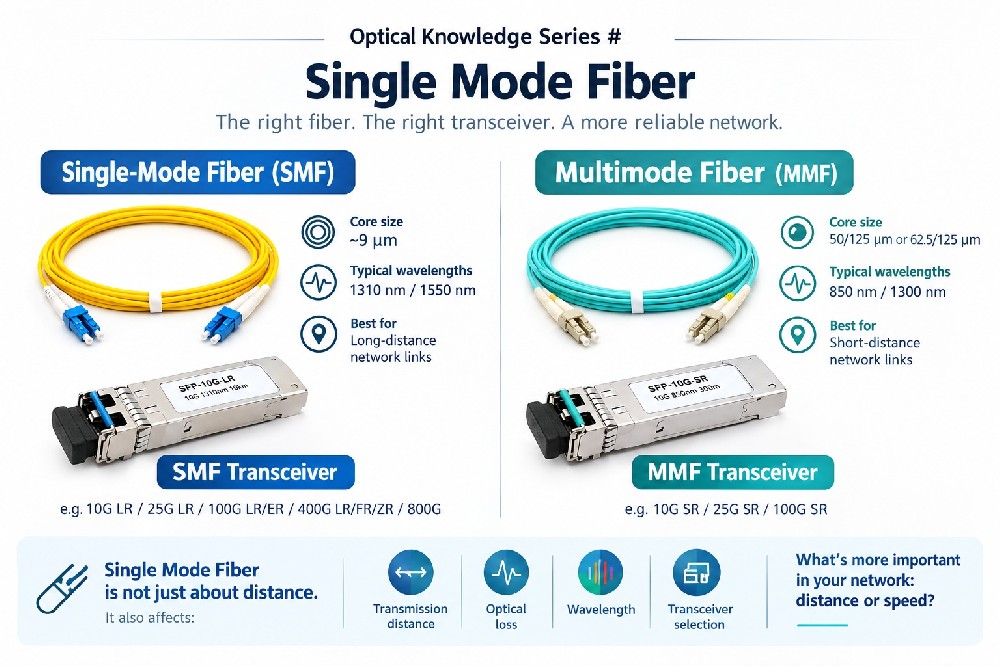
Many optical transceivers look similar from the outside, but some require two fiber strands while others operate over a single fiber.
Understanding the difference between Duplex and BiDi optical modules can help network engineers, IT managers and purchasing teams choose the right solution for their networks.
In this guide, we'll explain how each technology works, their advantages, limitations and common deployment scenarios.
What Is a Duplex Optical Module?
TX fiber
RX fiber
LC Duplex connector
Most common deployment
How Does a Duplex Transceiver Work?
Fiber A = Transmit
Fiber B = Receive
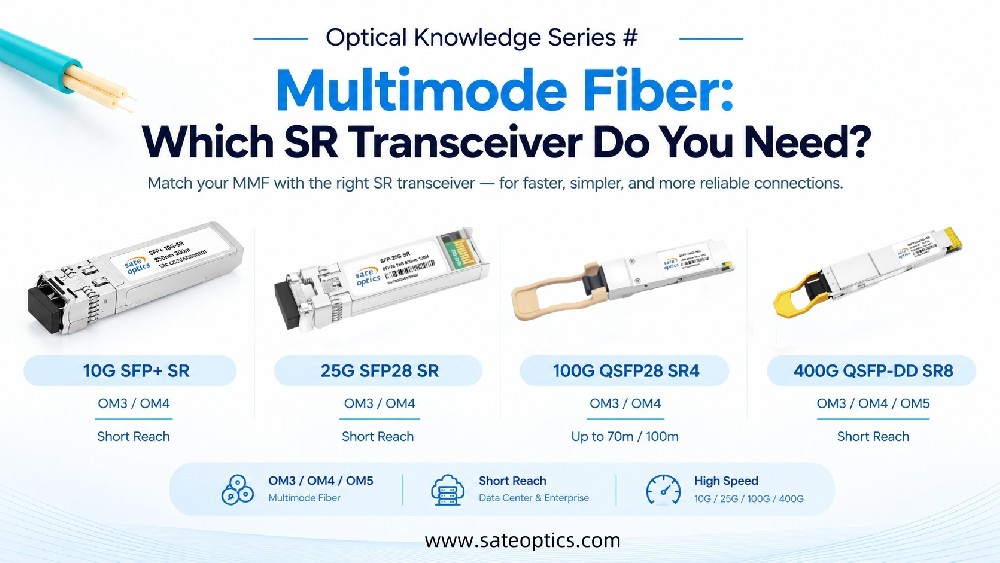
1G SX/LX
10G SR/LR
25G SR/LR
100G LR4
What Is a BiDi Optical Module?
Bidirectional
Single Fiber
LC Simplex
WDM technology
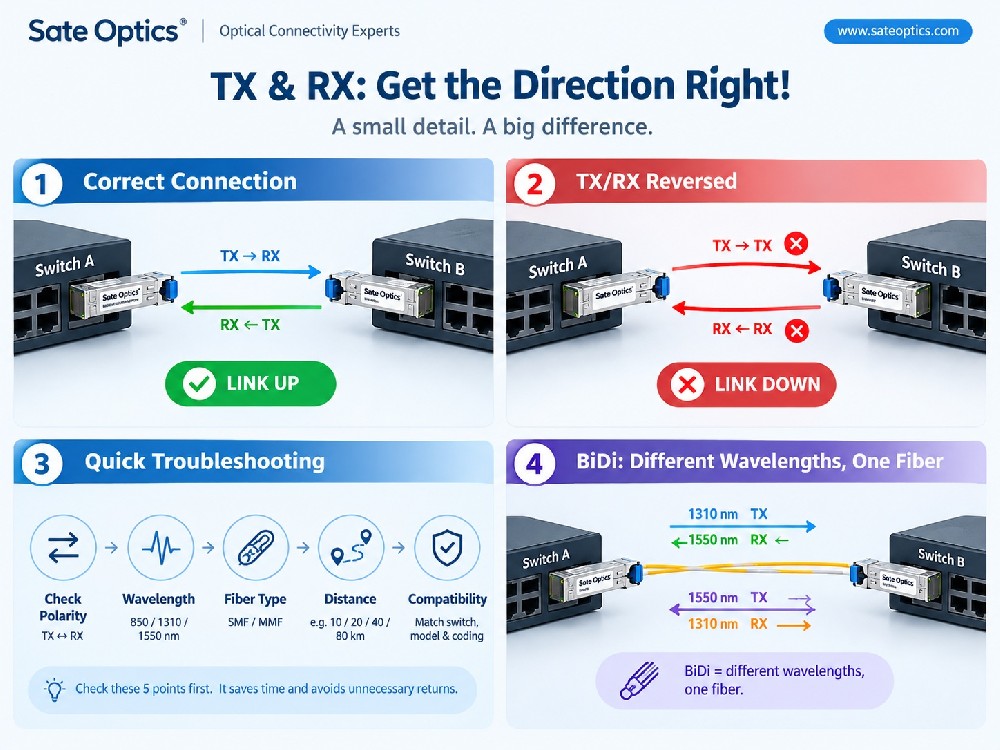
How Does a BiDi Module Work?
Module A
TX 1310nm
RX 1550nm
↓
Single Fiber
↓
Module B
TX 1550nm
RX 1310nm
Advantages of Duplex Modules
Simple deployment
Easier troubleshooting
Lower module cost
Industry standard
Advantages of BiDi Modules
Reduce fiber usage by 50%
Ideal when fiber resources are limited
Avoid laying additional fiber
Lower infrastructure cost
Duplex vs BiDi: Key Differences
| Feature | Duplex | BiDi |
|---|---|---|
| Fibers Required | 2 | 1 |
| Connector | LC Duplex | LC Simplex |
| Wavelengths | Same pair | Different TX/RX wavelengths |
| Fiber Utilization | Standard | Higher |
| Deployment Complexity | Lower | Slightly Higher |
| Cost of Cabling | Higher | Lower |
Common Mistakes When Deploying BiDi Modules
Using Two Identical BiDi Modules
Wrong:
1310TX/1550RX
↔
1310TX/1550RX
Correct:
1310TX/1550RX
↔
1550TX/1310RX
Which One Should You Choose?
Fiber is plentiful
Simplicity is important
Choose Duplex.
Fiber is limited
Campus network
Metro network
Fiber leasing costs are high
Choose BiDi.
Conclusion
Duplex and BiDi optical transceivers both provide reliable optical connectivity, but they are designed for different deployment requirements.
Duplex modules use separate fibers for transmission and reception, while BiDi modules use different wavelengths to transmit and receive over a single fiber.
Choosing the right option depends on your available fiber infrastructure, budget and network expansion plans.
Previous:Is Your Network Ready for 800G? Key Fiber Optic Trends Shaping Network Infrastructure in 2026
Next:Making the Right Choice Between SFP, SFP+, and QSFP — Save Cost and Avoid Compatibility Issues