
QSFP28 vs QSFP-DD: How to Choose the Right Solution for 100G and 400G Networks
2026-05-25 22:31:54
QSFP28 vs QSFP-DD: Key Differences and How to Choose the Right Solution for 100G and 400G Networks
As modern data centers, cloud computing platforms, and AI-driven applications continue to demand higher bandwidth, network architects are facing an important decision: should they continue deploying QSFP28 for 100G infrastructure, or prepare for the future with QSFP-DD for 400G networks?
Understanding the differences between QSFP28 and QSFP-DD is essential for businesses planning network upgrades, data center expansion, or long-term infrastructure investment.
What Is QSFP28?
QSFP28 is one of the most widely used optical transceiver form factors for 100G Ethernet networks.
QSFP28 modules typically support:
100G Ethernet transmission
Data center interconnects
Enterprise core and aggregation networks
High-speed storage networking
Cloud infrastructure
Popular QSFP28 module types include:
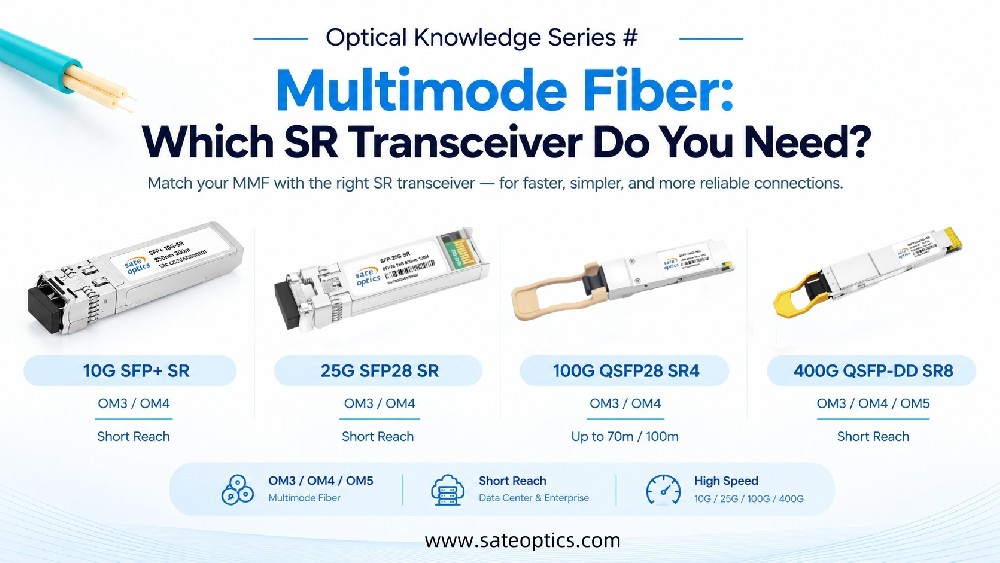
100G QSFP28 SR4
100G QSFP28 LR4
100G QSFP28 CWDM4
100G QSFP28 PSM4
Because of its mature ecosystem and lower deployment cost, QSFP28 remains a highly cost-effective solution for many 100G network environments.
What Is QSFP-DD?
QSFP-DD, also known as Quad Small Form-factor Pluggable Double Density, was developed to support next-generation high-speed networking.
QSFP-DD offers:
Higher lane density
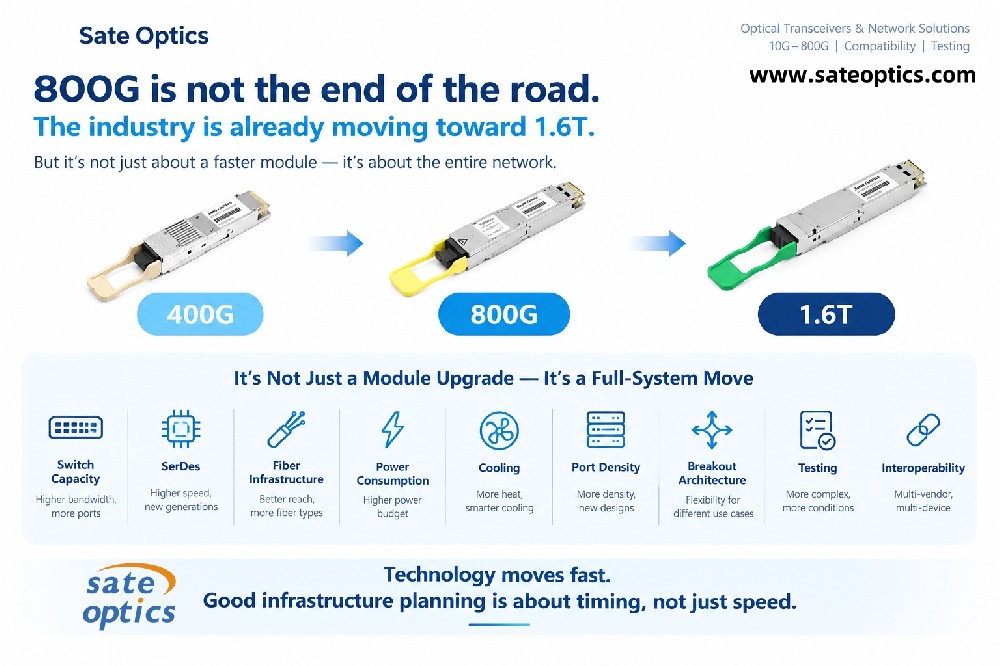
Support for 200G and 400G Ethernet
Improved scalability for future bandwidth growth
Backward compatibility with certain QSFP form factors
QSFP-DD has become increasingly important in:
AI and GPU clusters
Hyperscale data centers
Cloud service provider networks
High-performance computing environments
Large-scale spine-leaf architectures
Common QSFP-DD module types include:
400G QSFP-DD SR8
400G QSFP-DD DR4
400G QSFP-DD FR4
400G QSFP-DD LR4
QSFP28 vs QSFP-DD: Main Differences
| Feature | QSFP28 | QSFP-DD |
|---|---|---|
| Typical Speed | 100G | 200G / 400G |
| Electrical Lanes | 4 lanes | 8 lanes |
| Main Applications | Enterprise & standard data centers | AI, cloud, hyperscale |
| Power Consumption | Lower | Higher |
| Port Density | Standard | Higher density |
| Future Scalability | Limited to 100G | Designed for 400G evolution |
| Cost | More economical | Higher initial investment |
Which Solution Is Better for Your Network?
The right choice depends on your current infrastructure and future bandwidth planning.
When QSFP28 Is the Better Choice
QSFP28 is ideal if:
Your network primarily operates at 100G
Budget optimization is important
Existing switching infrastructure supports 100G
Traffic growth is relatively stable
You want a mature and proven ecosystem
For many enterprise networks and medium-sized data centers, 100G QSFP28 solutions still provide excellent performance and reliability.
When QSFP-DD Makes More Sense
QSFP-DD is a better long-term investment if:
You are planning 400G deployments
Your network traffic is growing rapidly
You operate AI workloads or cloud infrastructure
You want to reduce future migration costs
Higher port density is required
Although the initial investment is higher, QSFP-DD can help organizations avoid another major hardware refresh in the near future.
Planning a Smooth Migration from 100G to 400G
In many real-world projects, businesses do not replace their entire infrastructure at once.
A phased migration strategy is often the most practical approach:
Maintain stable 100G links where sufficient
Upgrade critical aggregation or spine links first
Prepare switching architecture for future 400G expansion
Reuse compatible cabling infrastructure whenever possible
Deploy cost-effective compatible optical transceivers to optimize budget
This strategy helps reduce operational risk while improving long-term scalability.
Compatible Optical Modules Help Reduce Upgrade Costs
Many organizations are also turning to compatible optical transceivers as a cost-effective alternative to OEM solutions.
High-quality compatible QSFP28 and QSFP-DD modules can provide:
Significant cost savings
Reliable interoperability
Fast deployment
Flexible inventory management
Support for multi-vendor environments
Choosing the right supplier with strong compatibility testing and quality control is essential for stable network operation.
Conclusion
Both QSFP28 and QSFP-DD play important roles in modern networking.
QSFP28 continues to dominate many 100G deployments because of its maturity and affordability, while QSFP-DD is becoming the preferred option for organizations preparing for 400G and future high-bandwidth applications.
The key is not simply choosing the newest technology, but selecting the solution that best matches:
Current bandwidth requirements
Future scalability
Budget considerations
Infrastructure compatibility
Long-term business growth
As data traffic continues to grow, careful planning today can help businesses build a more scalable and future-ready network infrastructure tomorrow.
FAQ
What is the difference between QSFP28 and QSFP-DD?
QSFP28 is mainly designed for 100G Ethernet applications using 4 electrical lanes, while QSFP-DD supports higher-density 200G and 400G networking with 8 electrical lanes. QSFP-DD provides better scalability for future high-bandwidth environments.
Is QSFP-DD backward compatible with QSFP28?
Yes, many QSFP-DD ports are backward compatible with QSFP28 modules, allowing organizations to migrate gradually from 100G to 400G networks while protecting existing infrastructure investments.
When should I choose QSFP28?
QSFP28 is a good choice for enterprises and data centers that primarily require stable and cost-effective 100G connectivity without immediate plans for 400G expansion.
When should I upgrade to QSFP-DD?
QSFP-DD is recommended for AI infrastructure, hyperscale data centers, cloud computing, and rapidly growing networks that require higher bandwidth and future scalability.
Can existing fiber cabling support QSFP-DD upgrades?
In many cases, yes. Existing MPO or single-mode fiber infrastructure may support 400G deployment depending on transmission distance and module type. A compatibility assessment is recommended before upgrading.
Are compatible QSFP28 and QSFP-DD modules reliable?
High-quality compatible optical transceivers can provide reliable performance, interoperability, and significant cost savings when sourced from experienced and reputable suppliers.
What are common QSFP28 module types?
Popular QSFP28 modules include:
100G QSFP28 SR4
100G QSFP28 LR4
100G QSFP28 CWDM4
100G QSFP28 PSM4
What are common QSFP-DD module types?
Common QSFP-DD modules include:
400G QSFP-DD SR8
400G QSFP-DD DR4
400G QSFP-DD FR4
400G QSFP-DD LR4
Previous:From Gigabit to Terabit: Understanding SFP, SFP+, QSFP, DAC, and AOC
Next:Is Your Network Ready for 800G? Key Fiber Optic Trends Shaping Network Infrastructure in 2026