
Understanding Transceiver Types: SFP, QSFP, DAC, AOC, CWDM & DWDM Explained
2026-05-18 20:04:40
Understanding Transceiver Types: A Simple Guide to SFP, QSFP, DAC, AOC & High-Speed Optical Modules
As network speeds continue to grow, terms like SFP, QSFP, DAC, AOC, CWDM, and DWDM are becoming more common in enterprise networks, telecom systems, and data centers.
For many IT teams and network engineers, these terms can initially seem confusing. But in reality, transceiver types are simply different ways to connect devices and transmit data over various distances and speeds.
This article provides a straightforward overview of the most common transceiver types used in modern networking environments.
What Is a Transceiver?
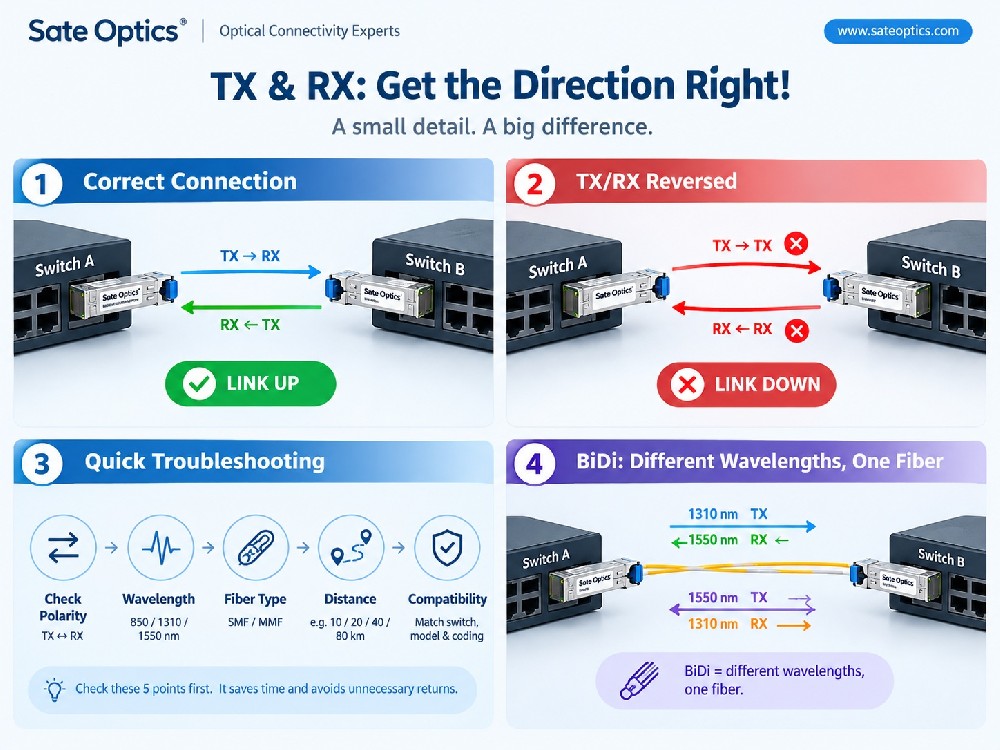
A transceiver is a device that converts electrical signals into optical signals (and vice versa) so data can be transmitted between switches, routers, servers, and storage systems.
Different transceivers are designed for different:
Transmission speeds
Distances
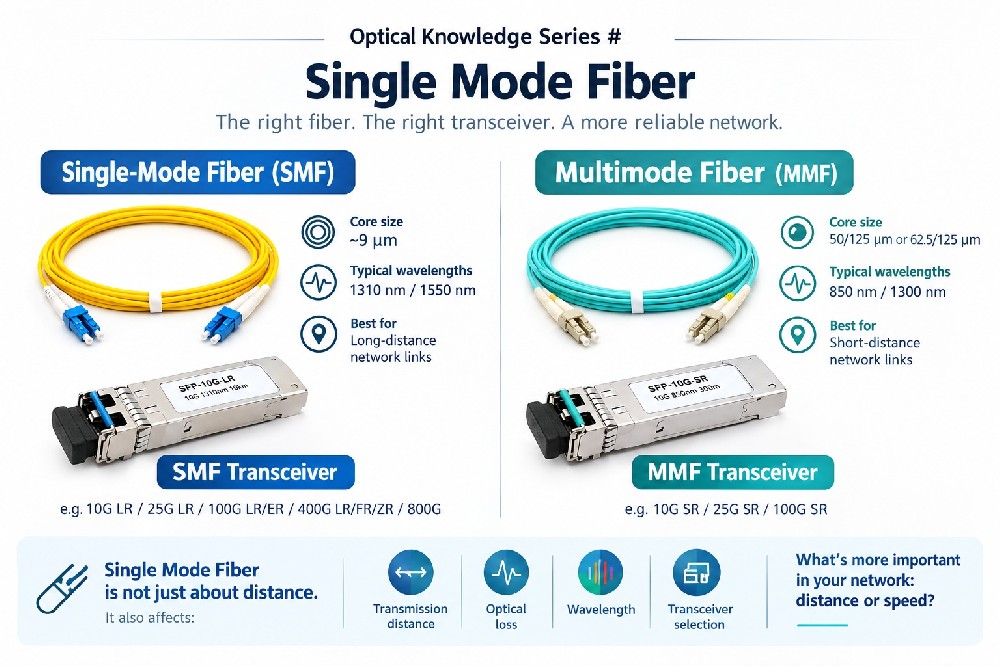
Cable types
Network environments
Selecting the right module helps ensure stable performance, compatibility, and cost efficiency.
Common Ethernet Speeds: 1G, 10G, 25G and Beyond
1G SFP
1G SFP modules are widely used for basic network connectivity and legacy infrastructure. They are commonly deployed in enterprise access networks and industrial communication systems.
10G SFP+
10G SFP+ modules remain one of the most widely used optical solutions in enterprise and telecom networks. They offer a good balance between performance, cost, and compatibility.
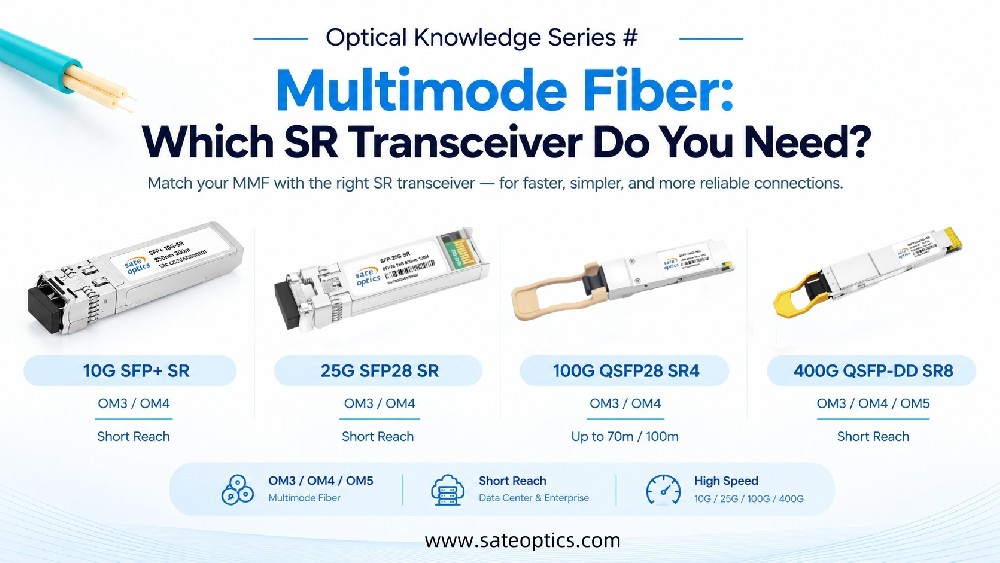
25G SFP28
25G SFP28 has become a popular upgrade path for modern data centers because it provides higher bandwidth efficiency compared to 10G while maintaining similar physical dimensions.
Copper Connectivity: RJ45 Modules
RJ45 transceivers use standard Ethernet copper cables, making deployment simple and convenient.
Advantages
Easy installation
Uses existing copper cabling
Familiar Ethernet interface
Limitations
Shorter transmission distance
Higher power consumption compared to fiber optics
More susceptible to electromagnetic interference
RJ45 solutions are often used in office environments and short-distance enterprise networking.
CWDM and DWDM: Increasing Fiber Capacity
CWDM (Coarse Wavelength Division Multiplexing) and DWDM (Dense Wavelength Division Multiplexing) technologies allow multiple optical signals to travel over a single fiber by using different wavelengths.
CWDM
CWDM is commonly used for metropolitan and enterprise fiber networks where moderate channel counts and lower costs are preferred.
DWDM
DWDM supports significantly higher channel density and longer transmission distances, making it suitable for telecom backbone networks, long-haul transmission, and high-capacity infrastructure.
These technologies help operators expand bandwidth without installing additional fiber.
High-Speed Optical Modules: 40G, 100G, 400G and 800G
As cloud computing, AI workloads, and data center traffic continue to increase, higher-speed optical modules are becoming increasingly important.
40G and 100G
40G and 100G QSFP modules are widely deployed in aggregation, spine-leaf architectures, and core networking environments.
400G Optical Modules
400G transceivers are now widely adopted in hyperscale data centers and high-performance computing environments.
Common 400G module types include:
400G DR4
400G FR4
400G LR4
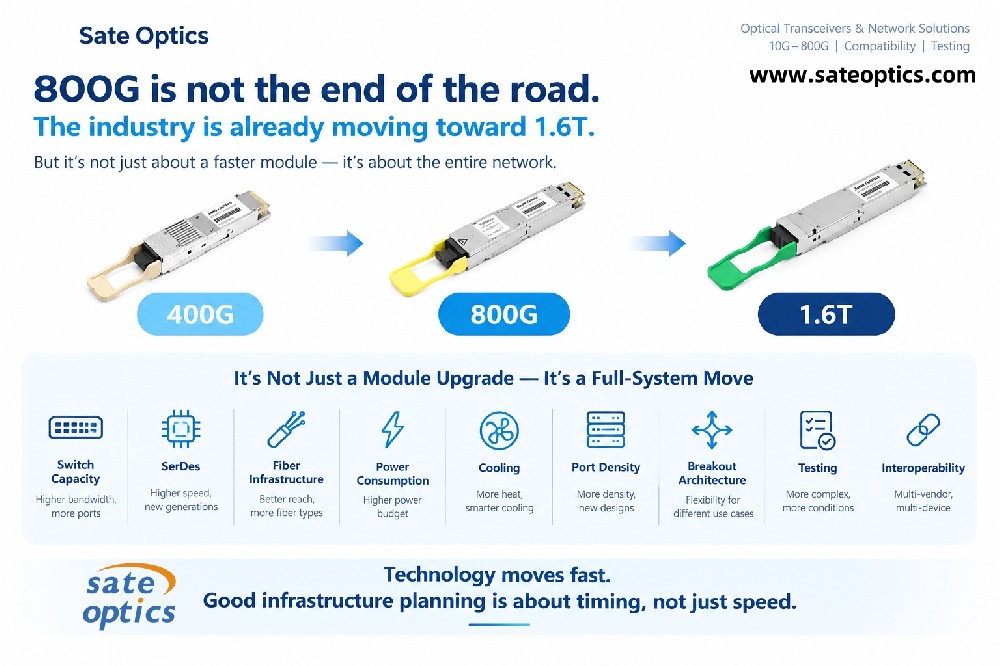
800G Optical Modules
800G optical technology is rapidly gaining attention for AI clusters and next-generation cloud infrastructure.
Popular 800G form factors and architectures include:
800G DR8
800G SR8
800G 2×FR4
Higher speeds provide greater bandwidth capacity but also introduce increased requirements for thermal management, power efficiency, and signal integrity.
DAC vs AOC: What’s the Difference?
DAC (Direct Attach Cable)
DAC cables use copper cable assemblies with integrated transceivers.
Benefits
Low cost
Very low latency
Low power consumption
Limitations
Very short transmission distance
Typically used within racks
DAC is ideal for short-range switch-to-server or switch-to-switch connections inside data centers.
AOC (Active Optical Cable)
AOC cables combine optical fiber with integrated optical transceivers.
Benefits
Longer reach than DAC
Lightweight and flexible
Suitable for high-speed connections between racks
Limitations
Higher cost than DAC
Less flexible for field replacement
AOCs are commonly used in high-density data center deployments.
Copper vs Fiber: A Simple Comparison
Copper Solutions (RJ45, DAC)
Lower cost
Short-distance connectivity
Simpler deployment
Fiber Solutions (SFP, QSFP, AOC, CWDM, DWDM)
Longer transmission distance
Higher bandwidth
Better scalability for future upgrades
The right choice depends on the application scenario, budget, and infrastructure requirements.
Key Factors When Choosing a Transceiver
Before selecting an optical module or cable solution, network teams typically evaluate:
Transmission Distance
Short-range and long-range applications require different technologies.
Required Speed
Bandwidth demand directly affects module type and network architecture.
Compatibility
Ensuring compatibility between switches, routers, and transceivers is essential for stable operation.
Budget and Scalability
Long-term upgrade planning can significantly reduce future infrastructure costs.
Conclusion
Modern networking includes a wide range of transceiver technologies designed for different speeds, distances, and deployment environments.
From 1G SFP modules to 800G optical solutions, understanding the basic differences between DAC, AOC, copper, and fiber technologies can help simplify network planning and improve deployment efficiency.
As data centers, telecom networks, and AI infrastructure continue evolving, optical interconnect technologies will remain a critical foundation for high-speed communication.
Previous:Why Checking DOM/DDM First Can Save Days of Unnecessary SFP Troubleshooting
Next:Why Third-Party Transceivers Trigger “Unsupported Transceiver” Alarms on Cisco Nexus 9300