
2026-04-20 18:43:34
Why Optical Modules Fail After Deployment — And How to Avoid It?
Optical modules (SFP, SFP+, QSFP, QSFP28, etc.) are designed for high reliability in modern networks. Yet in real-world deployments, many data centers, ISPs, and enterprise networks still experience unexpected link failures after installation.
These failures are rarely caused by “defective products” alone. More often, they result from environmental factors, compatibility issues, or improper deployment practices.
In this article, we’ll break down the real reasons why optical modules fail after deployment—and more importantly, how to prevent them.
1. Lack of Baseline Data (Day-1 Visibility Problem)
One of the most overlooked issues in fiber networks is the absence of baseline measurements.
After installation, most teams do NOT record:
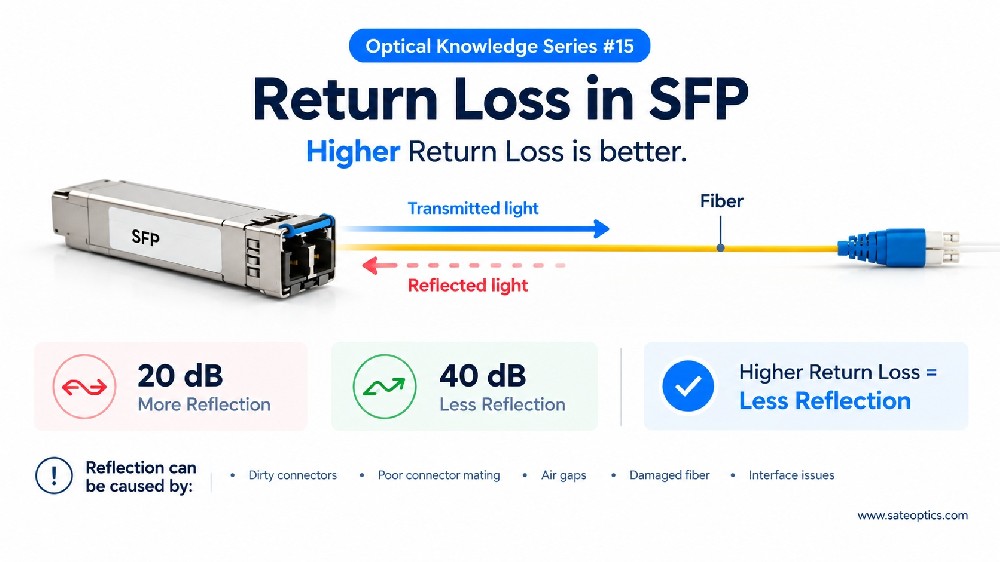
Transmit (Tx) optical power
Receive (Rx) optical power
Link loss (dB)
Why this matters
Without a Day-1 baseline:
You cannot detect gradual degradation
Troubleshooting becomes guesswork
Small issues go unnoticed until failure
How to avoid it
Record Rx/Tx power for every critical link at deployment
Label or document values in your monitoring system
Compare future readings against baseline trends
👉 This simple step can reduce troubleshooting time by over 50%
2. Compatibility Issues (Not All “Compatible” Modules Are Equal)
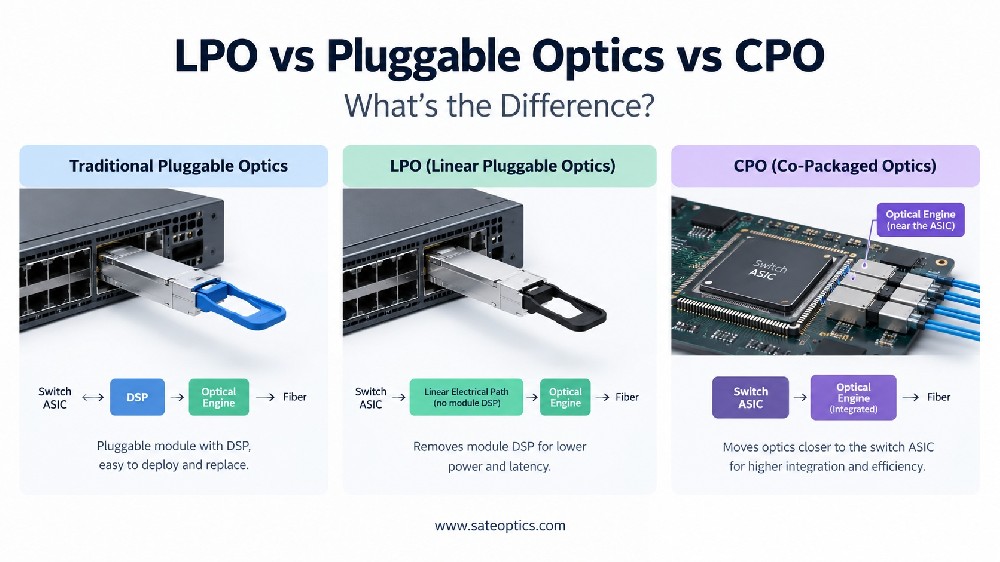
Many third-party optical modules claim compatibility with major vendors like Cisco Systems, but real-world performance varies.
Common problems
EEPROM coding mismatch
Firmware inconsistencies
Switch OS upgrades causing rejection
Vendor lock or strict validation policies
How to avoid it
Use vendor-tested and validated modules
Ensure compatibility with specific switch models and OS versions
Work with suppliers who provide multi-vendor interoperability testing
3. Optical Power Budget Miscalculation
Datasheets often state distances like “10km” or “40km”, but these assume ideal conditions.
Real-world factors include:
Fiber attenuation
Connector loss
Patch panel insertion loss
Environmental degradation
Result
A link that “should work” becomes unstable or fails intermittently.
How to avoid it
Always calculate actual link loss (dB)
Add safety margin (typically 2–3 dB)
Use optical power meters or OTDR testing
4. Poor Fiber Infrastructure Quality
Even the best optical modules cannot compensate for poor cabling.
Common infrastructure issues
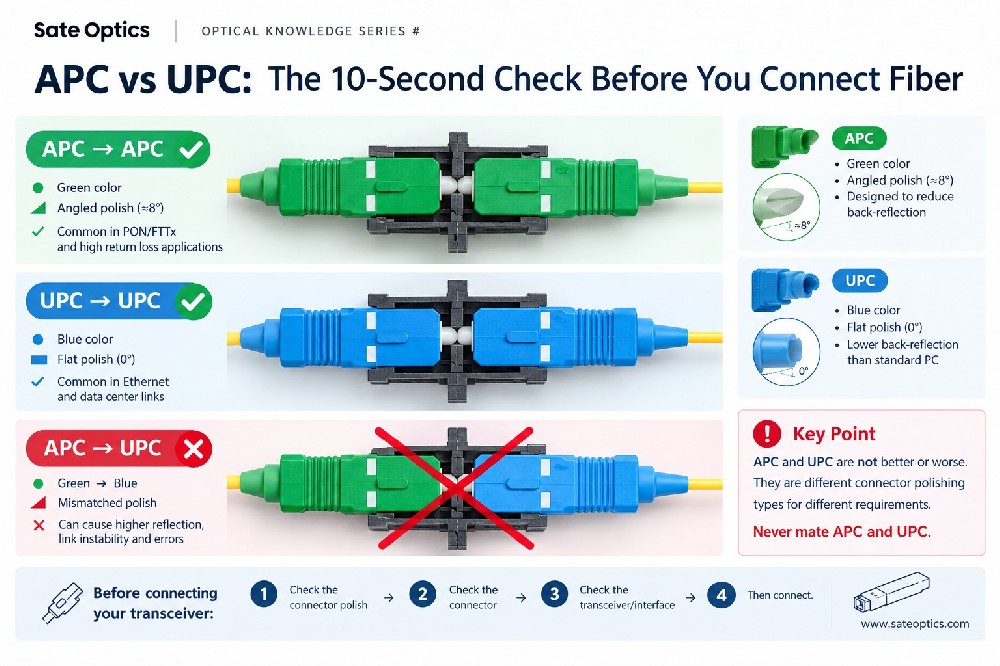
Dirty connectors
Low-quality patch cords
Excessive bending radius
Aging fiber
Visual reality in the field
How to avoid it
Always clean fiber connectors before installation
Use certified, high-quality patch cords
Follow proper cable management practices
5. Environmental Factors (Temperature & Power)
Optical modules are sensitive to operating conditions.
Key risks
High temperature in dense racks
Insufficient airflow
Power fluctuations
What happens
Increased error rates
Reduced module lifespan
Sudden link drops
How to avoid it
Ensure proper cooling in racks
Use industrial-grade modules if needed
Monitor temperature via DOM/DDM
6. Mixing Different Vendors Without Validation
Mixing modules from different vendors is common—but risky without testing.
Potential issues
Signal mismatch
Different laser characteristics
Interoperability instability
How to avoid it
Perform cross-vendor testing before deployment
Standardize suppliers for critical links
Avoid mixing in high-priority environments
7. No Monitoring or Preventive Maintenance
Most failures are not sudden—they develop over time.
Warning signs
Gradual drop in Rx power
Increasing error counts
Intermittent link flapping
How to avoid it
Enable DOM/DDM monitoring
Set threshold alerts
Perform periodic inspections
Best Practices Summary
To minimize optical module failures:
✅ Record baseline optical power values
✅ Verify compatibility before deployment
✅ Calculate real optical power budgets
✅ Maintain clean, high-quality fiber infrastructure
✅ Control environmental conditions
✅ Validate multi-vendor interoperability
✅ Implement continuous monitoring
❓ Frequently Asked Questions (FAQ)
What is the most common cause of optical module failure?
The most common cause is lack of baseline optical power data, which prevents early detection of signal degradation.
Can third-party optical modules cause network issues?
Yes. If not properly tested, compatibility issues—especially with vendors like Cisco Systems—can lead to instability or rejection.
How do I know if an optical module is failing?
Common signs include:
Decreasing Rx optical power
Increasing error rates
Intermittent link drops
DOM/DDM alerts
What is a safe optical power margin?
A safe margin is typically 2–3 dB above calculated link loss to ensure stability.
Do dirty fiber connectors affect performance?
Yes. Even small amounts of dust can significantly degrade signal quality.
Can temperature affect optical module performance?
Yes. High temperatures can increase error rates and reduce module lifespan.
Conclusion
Optical module failures after deployment are rarely random. They are usually the result of missing visibility, weak processes, or overlooked physical-layer factors.
By adopting a more disciplined approach to deployment, validation, and monitoring, organizations can significantly reduce downtime and improve network stability.
About Us
With over 20 years of experience in network infrastructure, we specialize in:
Cost-effective optical modules (SFP, QSFP, 100G/400G)
Enterprise and data center switching solutions
Customized compatibility and validation services
We help ISPs, data centers, and enterprises build stable, high-performance networks—while optimizing costs.
optical module failure
SFP module troubleshooting
QSFP failure causes
fiber optic link issues
optical transceiver compatibility
fiber network troubleshooting
data center network reliability
optical power budget calculation
DOM/DDM monitoring
third-party optical modules compatibility
Previous:Frequently Asked Questions About SFP Optical Power Monitoring
Next:Case Study: Reducing Data Center Downtime by 30% with Sate Optics' Optical Modules