
2026-05-19 19:32:39
400G QSFP-DD Transceiver Guide: SR8 vs DR4 vs FR4 vs LR4
As 400G networks become the new standard in data centers, cloud infrastructure, AI clusters, and high-performance computing environments, choosing the right 400G optical transceiver is becoming more important than ever.
Many network upgrade problems are not caused by switches or servers — they come from selecting the wrong optic for the application.
This guide explains the differences between 400G QSFP-DD SR8, DR4, FR4, and LR4 transceivers, including transmission distance, fiber type, connector type, deployment scenarios, and how to choose the right module for your network.
Why 400G QSFP-DD Modules Matter
400G QSFP-DD has become one of the most widely adopted form factors for modern high-bandwidth networks because it offers:
High port density
Lower power consumption compared with older CFP solutions
Flexible deployment options
Compatibility with modern 400G switches and routers
However, not all 400G modules are designed for the same environment.
Some are optimized for ultra-short data center links, while others are built for long-distance campus or metro networks.
Understanding the differences can help avoid:
Compatibility issues
Unnecessary fiber costs
Cooling and airflow problems
Overpaying for unnecessary transmission distance
400G SR8 vs DR4 vs FR4 vs LR4
400G QSFP-DD SR8
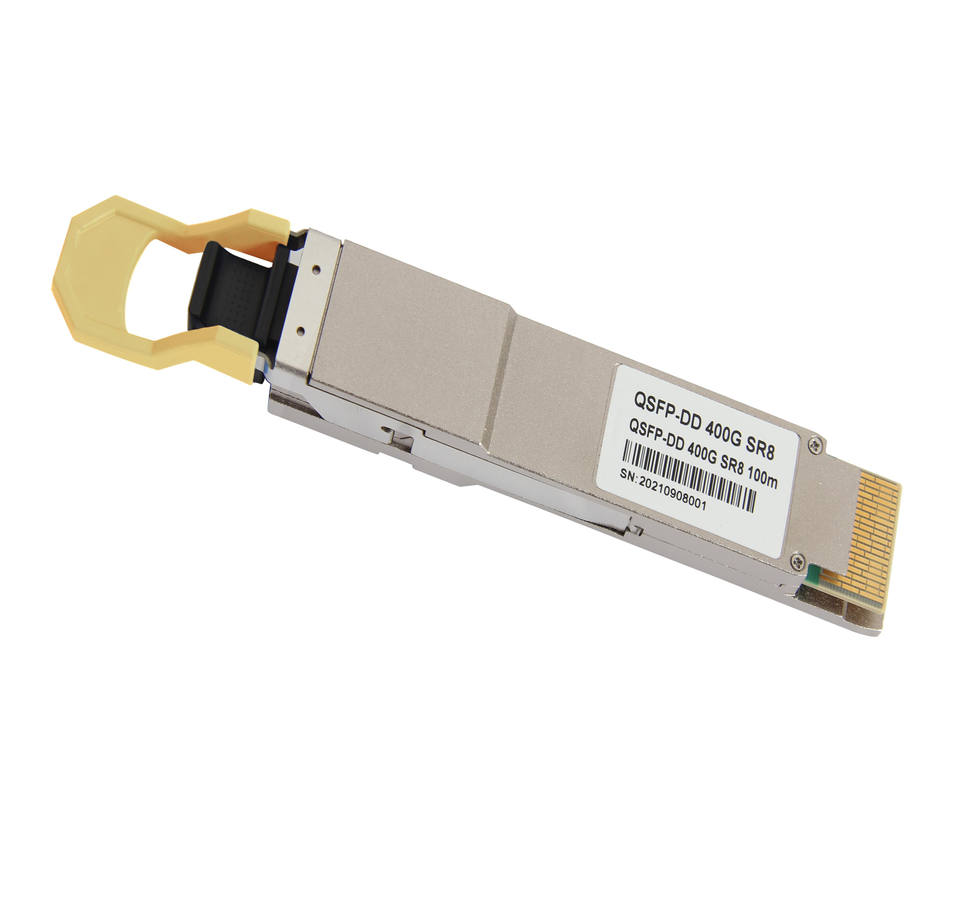
What Is 400G SR8?
400G SR8 is a short-range multimode optical module designed mainly for high-density data center environments.
It typically uses:
MPO-16 connector
Multimode fiber (MMF)
8 transmit + 8 receive optical lanes
Transmission Distance
Up to 70m over OM3
Up to 100m over OM4
Best Application Scenarios
Spine-to-leaf connections
Inside data halls
Short-distance switch interconnects
High-density AI clusters
Advantages
✅ Lowest cost among common 400G optics
✅ Very low latency
✅ Ideal for ultra-short reach deployments
Limitations
❌ Short transmission distance
❌ Requires more fiber cores
❌ Multimode fiber scalability is limited
2. 400G QSFP-DD DR4
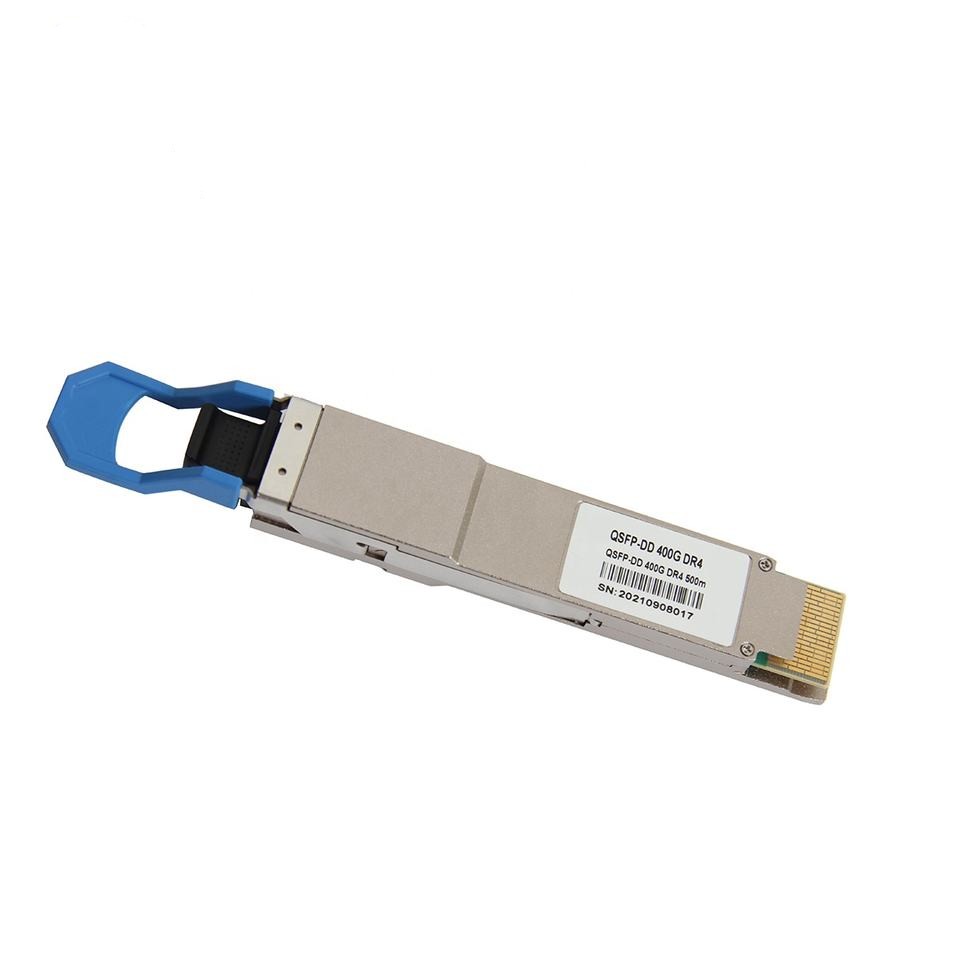
What Is 400G DR4?
400G DR4 is one of the most popular 400G optical modules for modern hyperscale data centers.
It uses:
MPO-12 connector
Single-mode fiber (SMF)
4 parallel transmit and receive channels
Transmission Distance
Up to 500m
Best Application Scenarios
Large-scale cloud infrastructure
AI and GPU clusters
Modern leaf-spine architecture
High-speed data center fabrics
Advantages
✅ Lower power consumption
✅ Single-mode future scalability
✅ Excellent for structured cabling
Limitations
❌ Requires parallel fiber infrastructure
❌ MPO cleaning becomes critical
Many modern data centers prefer DR4 because it balances cost, scalability, and performance very well.
3. 400G QSFP-DD FR4
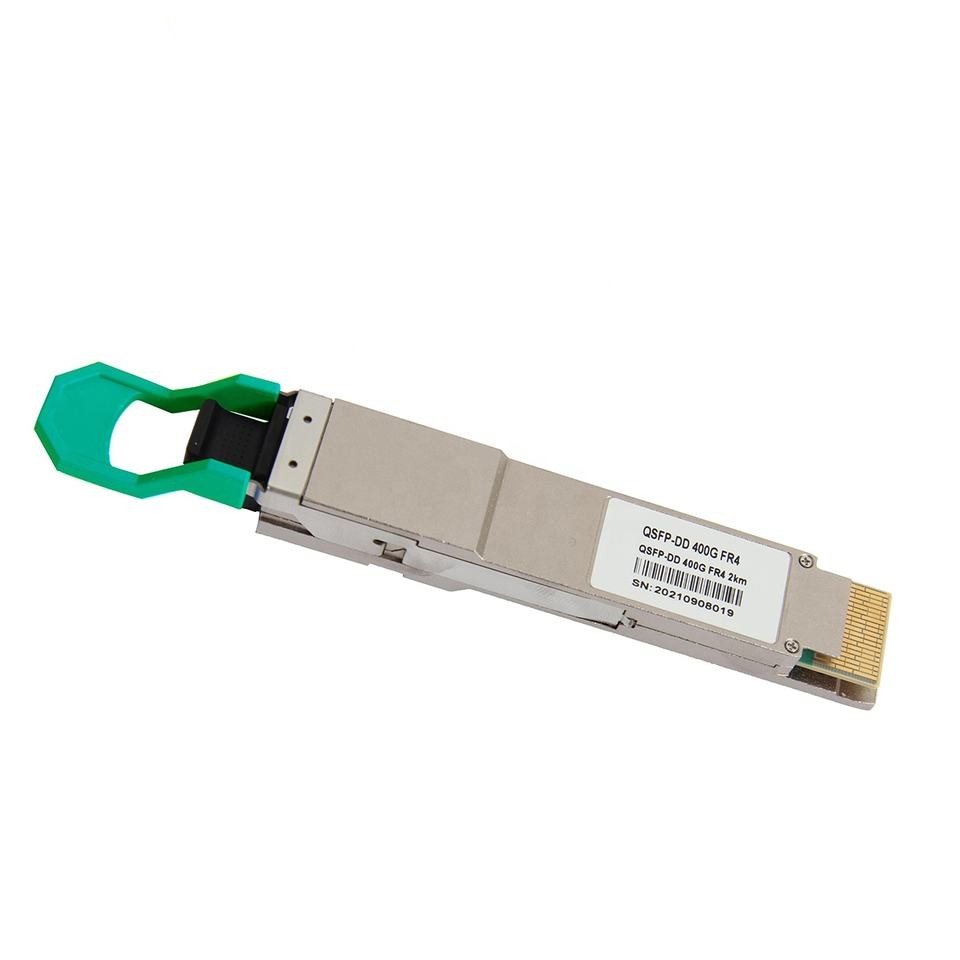
What Is 400G FR4?
400G FR4 uses CWDM technology to transmit 400G signals over duplex single-mode fiber.
Unlike SR8 or DR4, FR4 only requires:
Duplex LC connector
Two-fiber single-mode connection
Transmission Distance
Up to 2km
Best Application Scenarios
Enterprise data centers
Leaf-to-spine interconnects
Environments with limited fiber resources
Migration from 100G/200G duplex LC infrastructure
Advantages
✅ Uses only 2 fibers
✅ Easier cabling management
✅ Lower fiber infrastructure cost
Limitations
❌ Higher module cost than SR8
❌ CWDM components increase complexity
FR4 is becoming extremely popular because many operators want to reduce fiber count while maintaining high bandwidth.
4. 400G QSFP-DD LR4
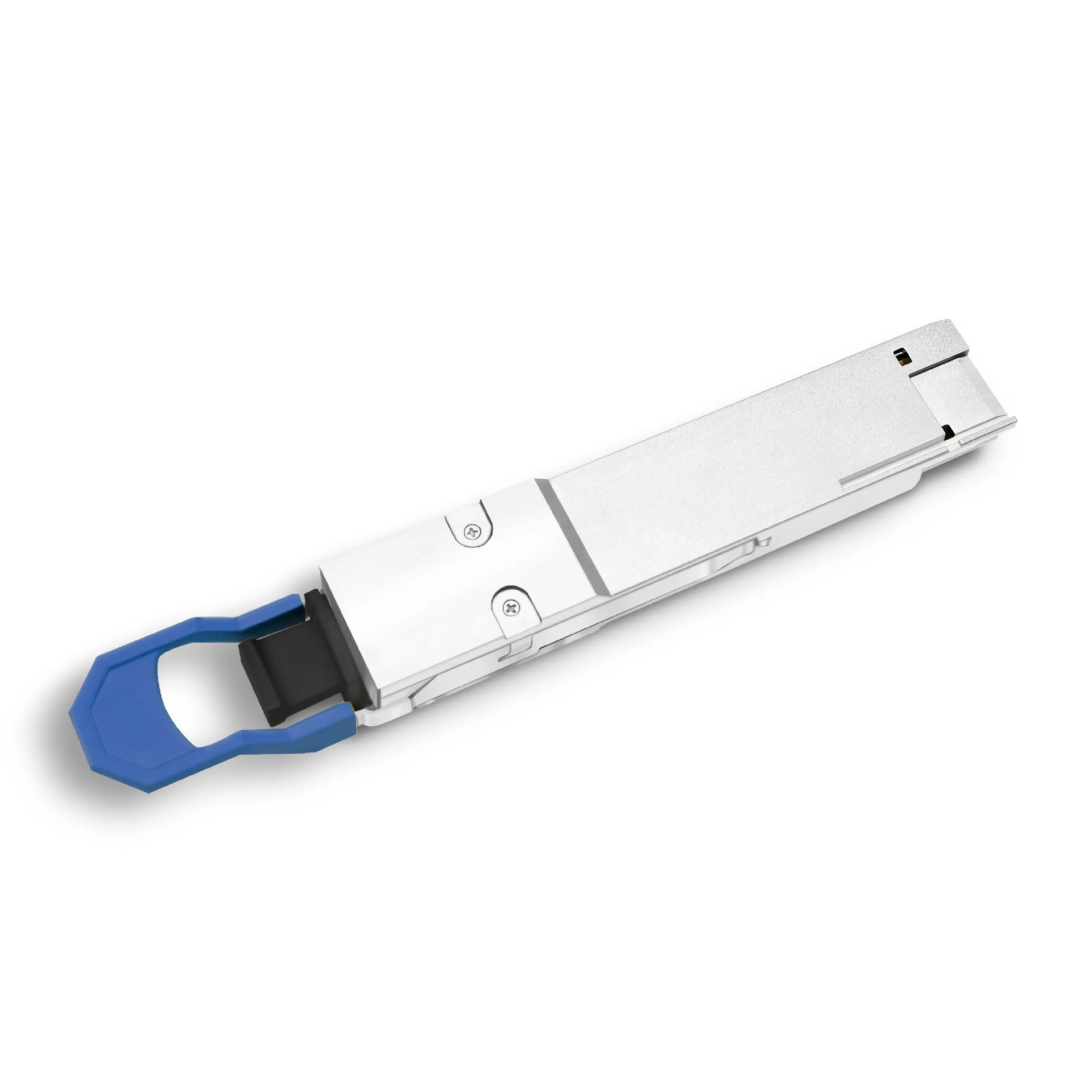
What Is 400G LR4?
400G LR4 is designed for longer-distance single-mode transmission.
It commonly uses:
Duplex LC connector
CWDM wavelengths
Single-mode fiber
Transmission Distance
Up to 10km
Best Application Scenarios
Campus backbone
Metro access network
Long-distance enterprise interconnects
Distributed data centers
Advantages
✅ Long transmission reach
✅ Reuses existing duplex LC fiber
✅ Ideal for inter-building connections
Limitations
❌ Higher power consumption
❌ More expensive than shorter-range optics
Quick Comparison: SR8 vs DR4 vs FR4 vs LR4
| Module | Fiber Type | Connector | Distance | Best Use Case |
|---|---|---|---|---|
| SR8 | MMF | MPO-16 | 100m | Short-range data center |
| DR4 | SMF | MPO-12 | 500m | Hyperscale & AI networks |
| FR4 | SMF | Duplex LC | 2km | Enterprise & leaf-spine |
| LR4 | SMF | Duplex LC | 10km | Campus & metro links |
How to Choose the Right 400G Optical Module
Before selecting a 400G QSFP-DD transceiver, ask these questions:
1. What Is the Transmission Distance?
Distance is the first factor that determines module type.
Under 100m → SR8
Around 500m → DR4
Up to 2km → FR4
Up to 10km → LR4
2. What Fiber Infrastructure Do You Already Have?
Existing cabling often determines the most cost-effective option.
Existing MPO multimode → SR8
Existing MPO single-mode → DR4
Existing duplex LC single-mode → FR4 or LR4
3. Are Fiber Resources Limited?
If fiber count is limited, FR4 and LR4 are usually better because they only require duplex LC fiber.
4. Is Power Consumption Important?
In high-density AI and cloud environments, thermal performance and airflow matter more than many people realize.
Higher-power modules may:
Increase cooling requirements
Affect rack airflow
Reduce switch port density efficiency
This is one reason why DR4 has become very popular in modern hyperscale deployments.
Common Mistakes When Deploying 400G Optics
Many deployment issues come from simple planning mistakes.
Common Problems:
❌ Using multimode optics for future long-distance expansion
❌ Ignoring switch airflow direction
❌ Mixing incompatible breakout architectures
❌ Poor MPO cleaning practices
❌ Choosing longer-distance optics than actually needed
In many cases, selecting the correct optic can significantly reduce total network upgrade costs.
Final Thoughts
400G network deployment is no longer just about bandwidth.
The right optical transceiver affects:
Network stability
Future scalability
Cabling complexity
Power consumption
Long-term infrastructure cost
There is no single “best” 400G module.
The best choice depends on your:
Distance requirements
Fiber infrastructure
Rack density
Upgrade plan
Budget
Understanding the differences between SR8, DR4, FR4, and LR4 helps build a more efficient and scalable 400G network.
Related Keywords
400G QSFP-DD transceiver
400G SR8 vs DR4
400G FR4 vs LR4
400G optical module guide
400G transceiver compatibility
400G data center optics
400G single-mode transceiver
400G multimode optical module
400G Ethernet optics
400G fiber transceiver guide
Previous:How 400G QSFP-DD Transceiver Modules Are Tested for Reliability and Performance
Next:From Gigabit to Terabit: Understanding SFP, SFP+, QSFP, DAC, and AOC