
What is FEC in 100G Optical Modules?
2026-05-13 20:54:11
What is FEC in 100G Optical Modules? A Complete Guide for Stable High-Speed Networking
As 100G networks become standard in modern data centers, telecom infrastructure, and enterprise backbone deployments, network engineers are paying closer attention to signal stability and transmission reliability.
One critical technology behind stable 100G transmission is FEC (Forward Error Correction).
Although often overlooked during deployment, FEC plays a major role in reducing transmission errors and improving overall link performance in high-speed optical networks.
In this article, we explain what FEC is, how it works in 100G optical modules, why it matters, and common troubleshooting tips for 100G Ethernet links.
What Is FEC (Forward Error Correction)?
FEC, short for Forward Error Correction, is an error-control technology used in high-speed communication systems.
Its purpose is to detect and automatically correct data transmission errors without requiring retransmission.
At lower network speeds such as 1G or 10G, signal loss and bit errors are usually manageable.
However, at 100G Ethernet speeds, even very small signal degradation can lead to packet loss, unstable links, or failed connections.
FEC helps solve this problem by adding redundant data to the transmission stream, allowing the receiving device to identify and correct errors in real time.
Why Is FEC Important in 100G Optical Modules?
As network bandwidth increases, signal integrity becomes more challenging.
100G optical transceivers operate at extremely high data rates, making them more sensitive to:
Fiber attenuation
Connector contamination
Signal noise
Crosstalk
Insertion loss
PCB and switch port limitations
Without proper error correction, these factors may significantly increase the Bit Error Rate (BER).
FEC improves transmission quality by reducing BER and increasing link stability.
Main Benefits of FEC in 100G Networks
Improved signal integrity
Lower bit error rate (BER)
More reliable long-distance transmission
Better compatibility in high-density data centers
Increased overall network stability
Common Types of FEC in 100G Ethernet
Different 100G standards and switch vendors may use different FEC modes.
The two most common types are:
1. RS-FEC (Reed-Solomon FEC)
RS-FEC is widely used in modern high-speed Ethernet standards.
It provides stronger error correction capability and is commonly used in:
100G CWDM4
100G LR4
100G DR
200G and 400G Ethernet
RS-FEC is especially important for longer transmission distances and PAM4-based networks.
2. FC-FEC (Fire Code FEC)
FC-FEC is an earlier FEC technology with lower correction capability than RS-FEC.
It may still appear in certain legacy devices or specific switch platforms.
Does Every 100G Optical Module Require FEC?
No.
Whether FEC is required depends on:
Optical module type
Transmission distance
Switch compatibility
Network design
Signal quality
Examples
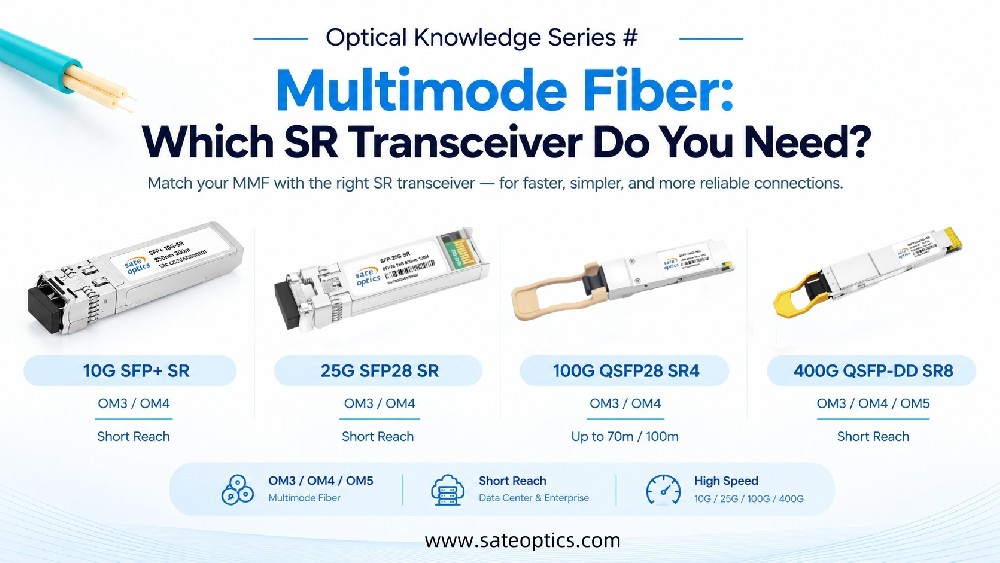
100G SR4
Short-distance multimode transmission
Often works without mandatory FEC
Commonly used inside data centers
100G CWDM4 / LR4
Longer transmission distance
More sensitive to signal degradation
FEC is frequently recommended or required
Common 100G Link Issue: FEC Mismatch
One of the most common deployment problems in 100G networks is:
Optical modules are detected, but the link does not come up.
In many cases, the root cause is a FEC mismatch between the two connected devices.
For example:
One switch has RS-FEC enabled
The other side has FEC disabled
Different vendors use incompatible default settings
As a result, the optical link may fail even when both transceivers and fiber cables are functioning correctly.
How to Check FEC Settings
When troubleshooting 100G optical links, engineers should always verify:
Checklist
Whether FEC is enabled on both sides
RS-FEC or FC-FEC compatibility
Switch vendor requirements
Optical module specifications
Firmware and operating system compatibility
Different switch vendors such as Cisco, Juniper, Arista, Huawei, and Mellanox may implement FEC differently.
Always confirm compatibility before deployment.
FEC Becomes More Important in 400G and 800G Networks
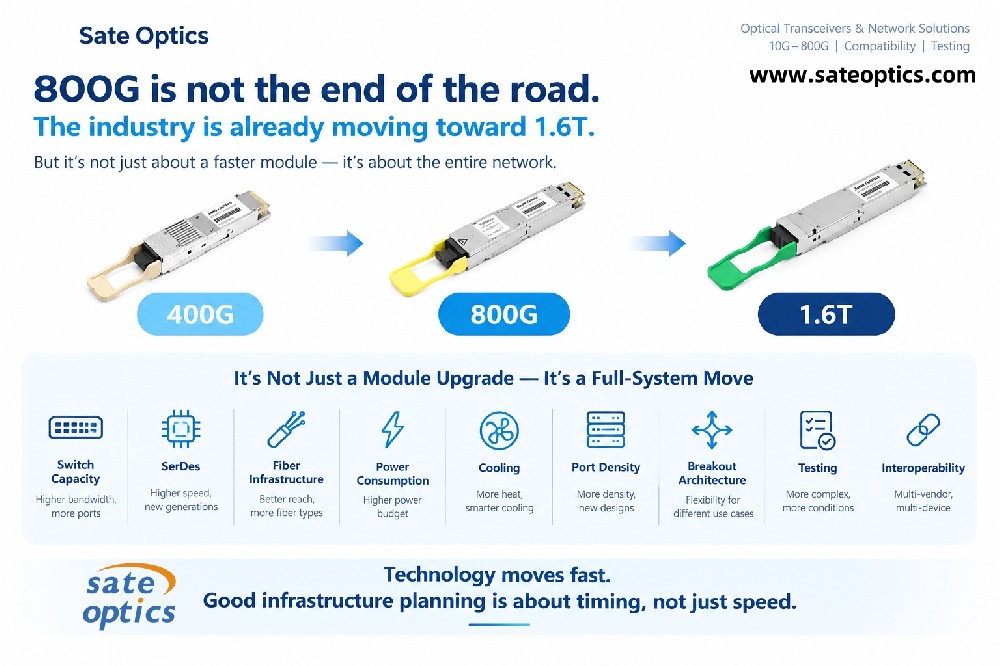
As networks evolve from 100G to 400G and 800G Ethernet, FEC becomes even more critical.
Higher-speed PAM4 modulation introduces increased signal sensitivity, making advanced error correction essential for maintaining stable transmission.
Modern data centers increasingly rely on RS-FEC technologies to support:
AI clusters
Cloud computing
Hyperscale data centers
High-density switching environments
Conclusion
FEC is a key technology behind reliable 100G optical networking.
Although it operates in the background, proper FEC configuration can determine whether a high-speed optical link performs reliably or experiences constant instability.
Understanding FEC helps network engineers:
Improve 100G link stability
Reduce troubleshooting time
Optimize network performance
Avoid compatibility issues
When deploying 100G optical modules, always consider not only compatibility and distance, but also FEC requirements and switch configuration.
100G Optical Module
What is FEC
Forward Error Correction
100G Ethernet FEC
RS-FEC vs FC-FEC
100G QSFP28 Troubleshooting
Optical Transceiver Guide
Data Center Networking
100G CWDM4 FEC
100G LR4 Compatibility
Previous:Compatible vs Original SFP: Can You Safely Use Third-Party Optics?
Next:How 400G QSFP-DD Transceiver Modules Are Tested for Reliability and Performance